We help health systems and academic medical centers use Epic data to improve analytics, automate recurring work and support research collaboration. Our team defines the outcome with you, implements the solution on Databasin and supports its use, including the process changes and training your people need.


Results from customer work

- 20+ systems unifiedDatabasin brought WashU Medicine's financial data together.
- Infrastructure costs at 1/3 of the traditional approachWashU Medicine's result from changing its data infrastructure.
18%
Higher grant proposal success
Measured at a research institution working with Databasin.
“What used to take weeks or sometimes even months now happens in minutes.”
Epic data for business and research
We prepare Epic data and build the applications finance, operations and research teams need to use it. The service combines Databasin with the team that implements it.
The question or process you want to improve guides the work. We map its current steps, systems and decisions with the people responsible, then define the intended return.
We adapt Clarity and available Caboodle records to the local Epic build and combine them with relevant data from other systems. These prepared records support plain-language questions, Data Apps and governed analysis.
Scheduled preparation lets teams reuse that work for subsequent operational and research reviews. They can use the prepared records to investigate the findings.
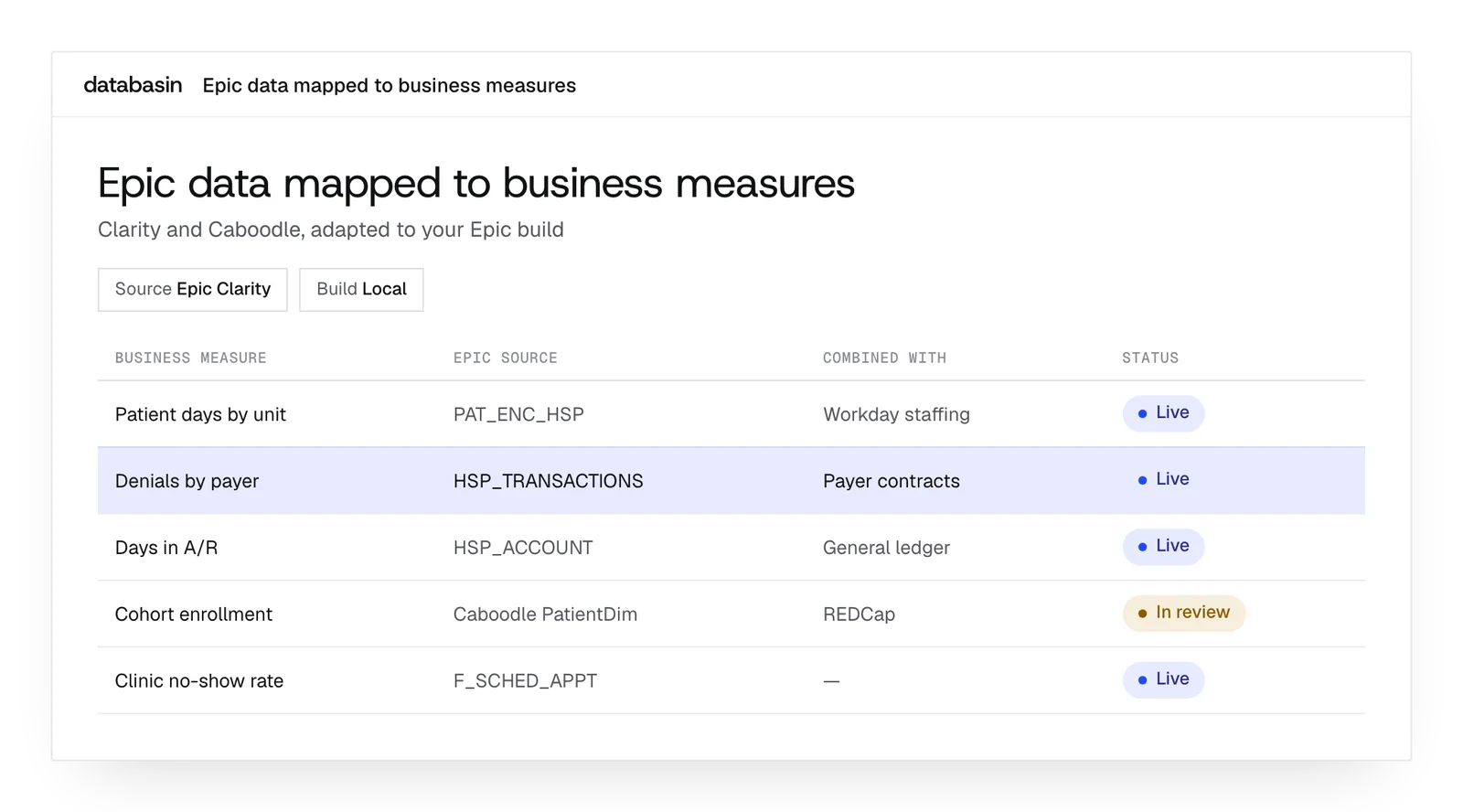
The platform behind the work
People can ask questions, build Data Apps and automate recurring work using the data connected through Databasin.
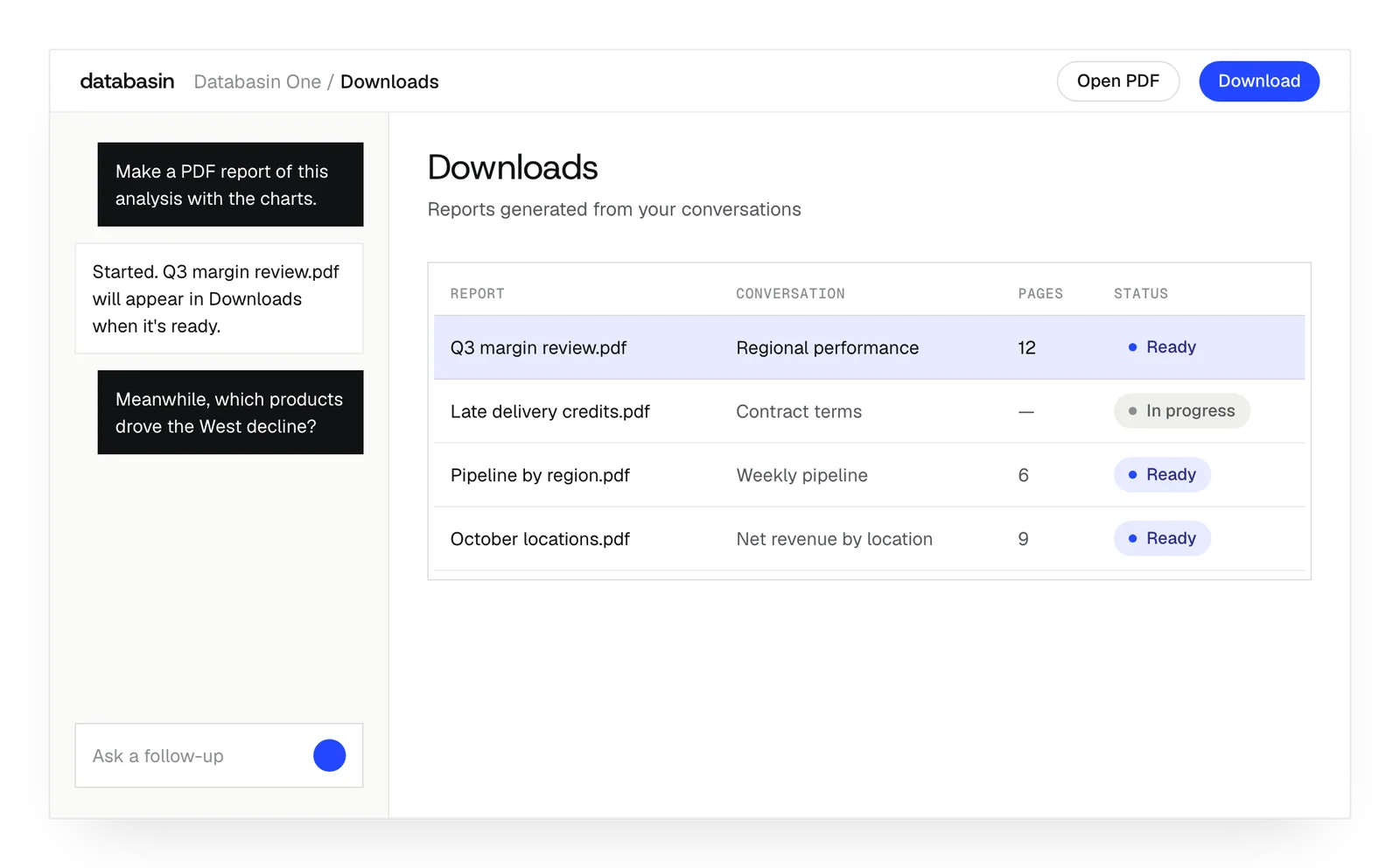
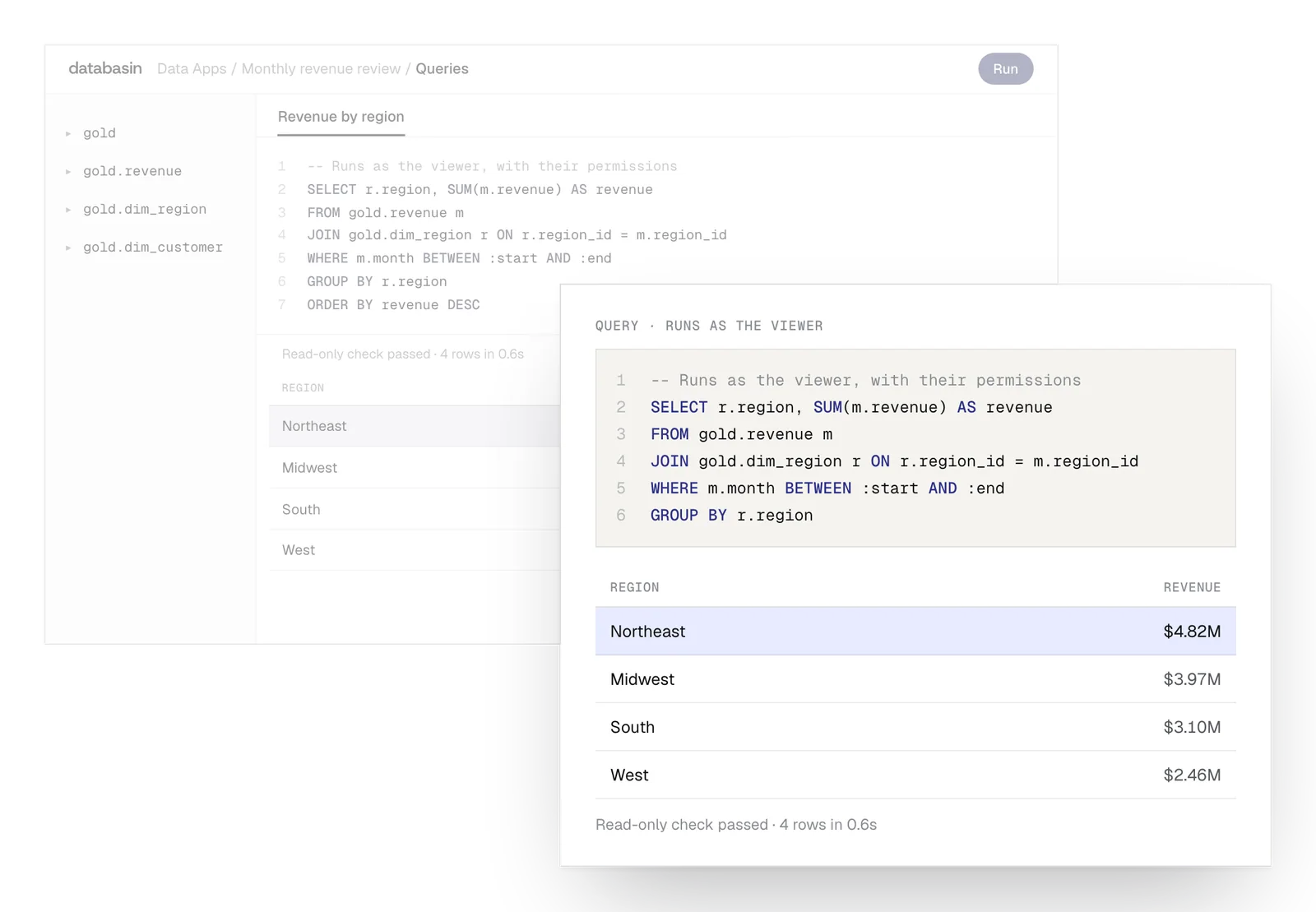
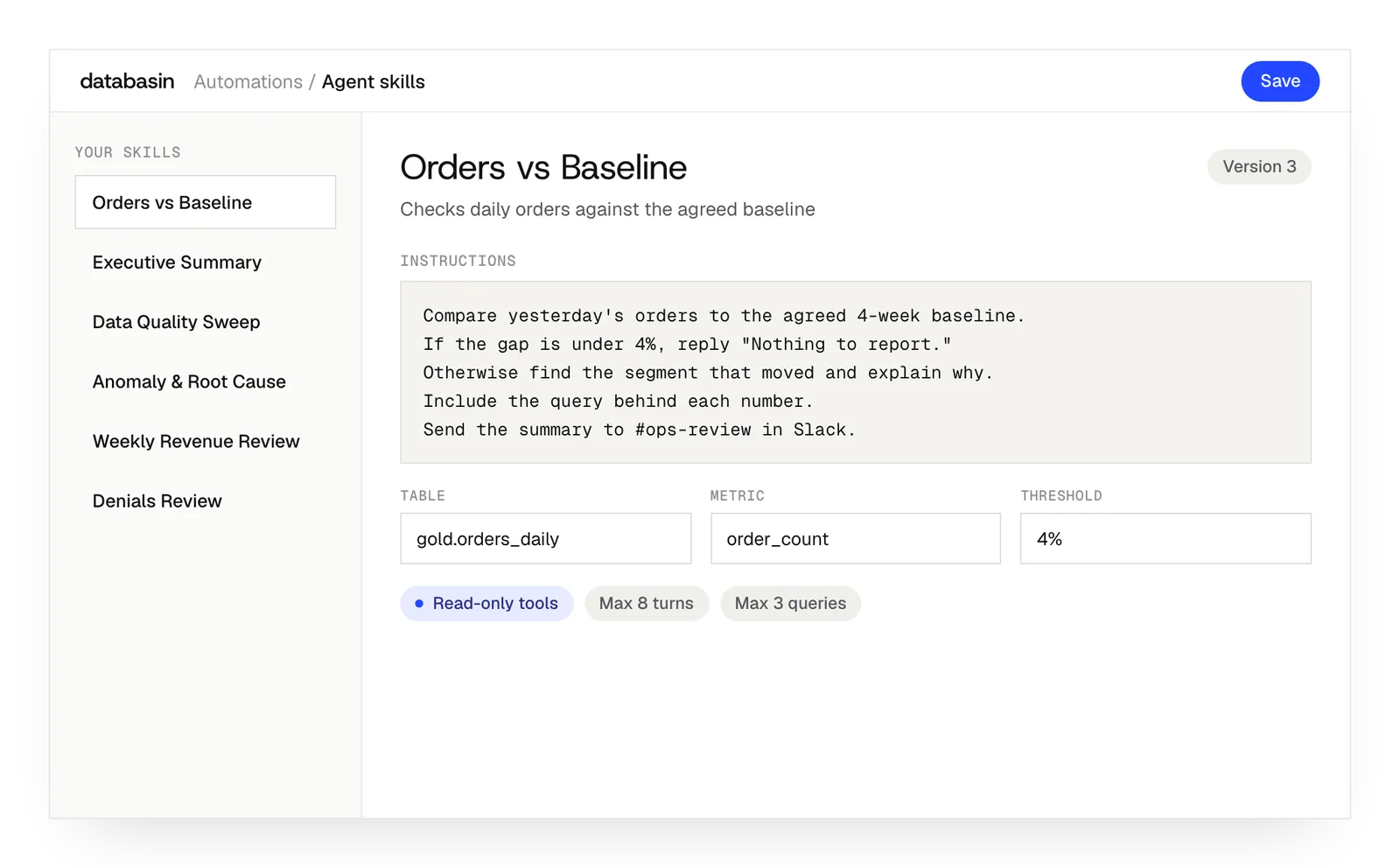
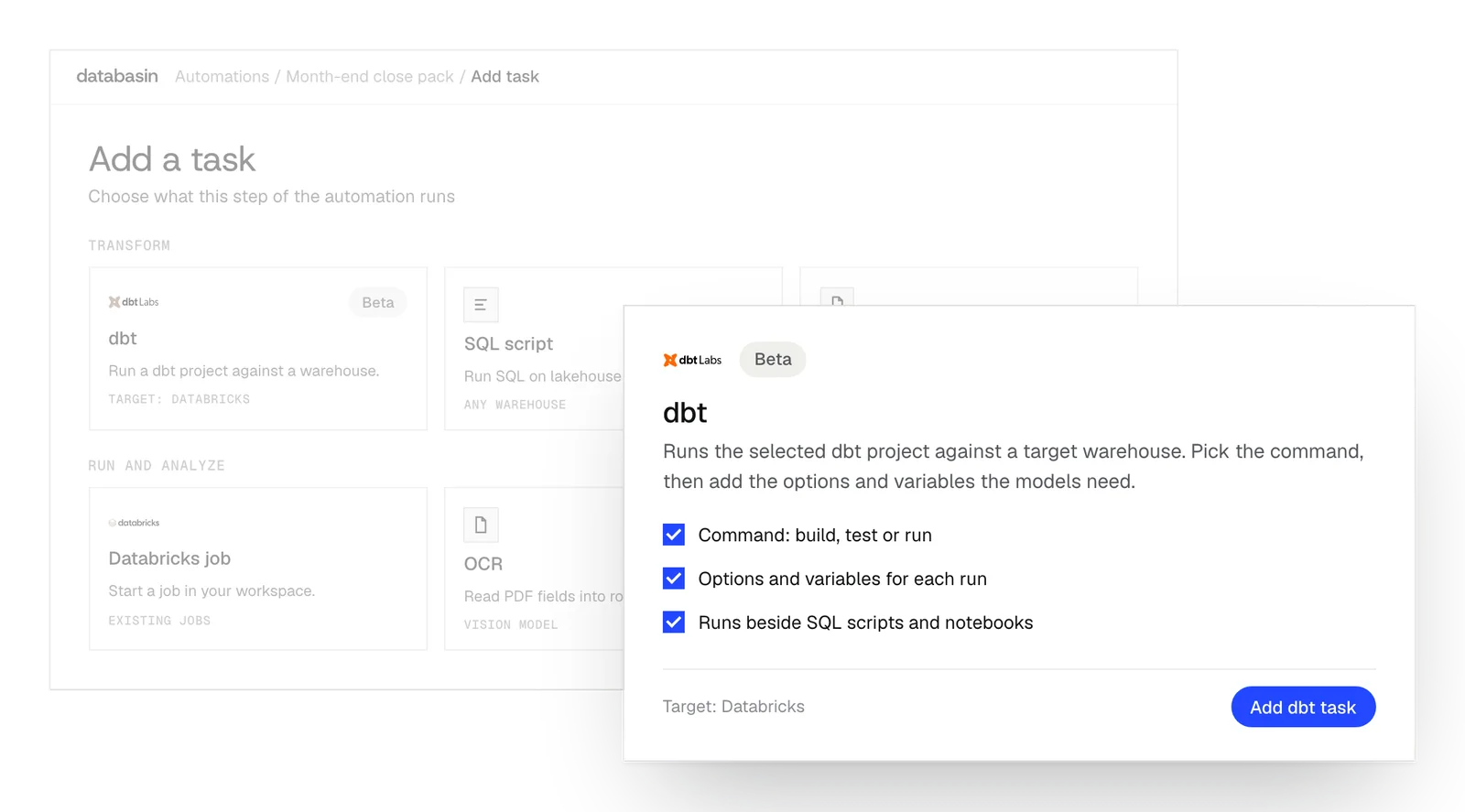
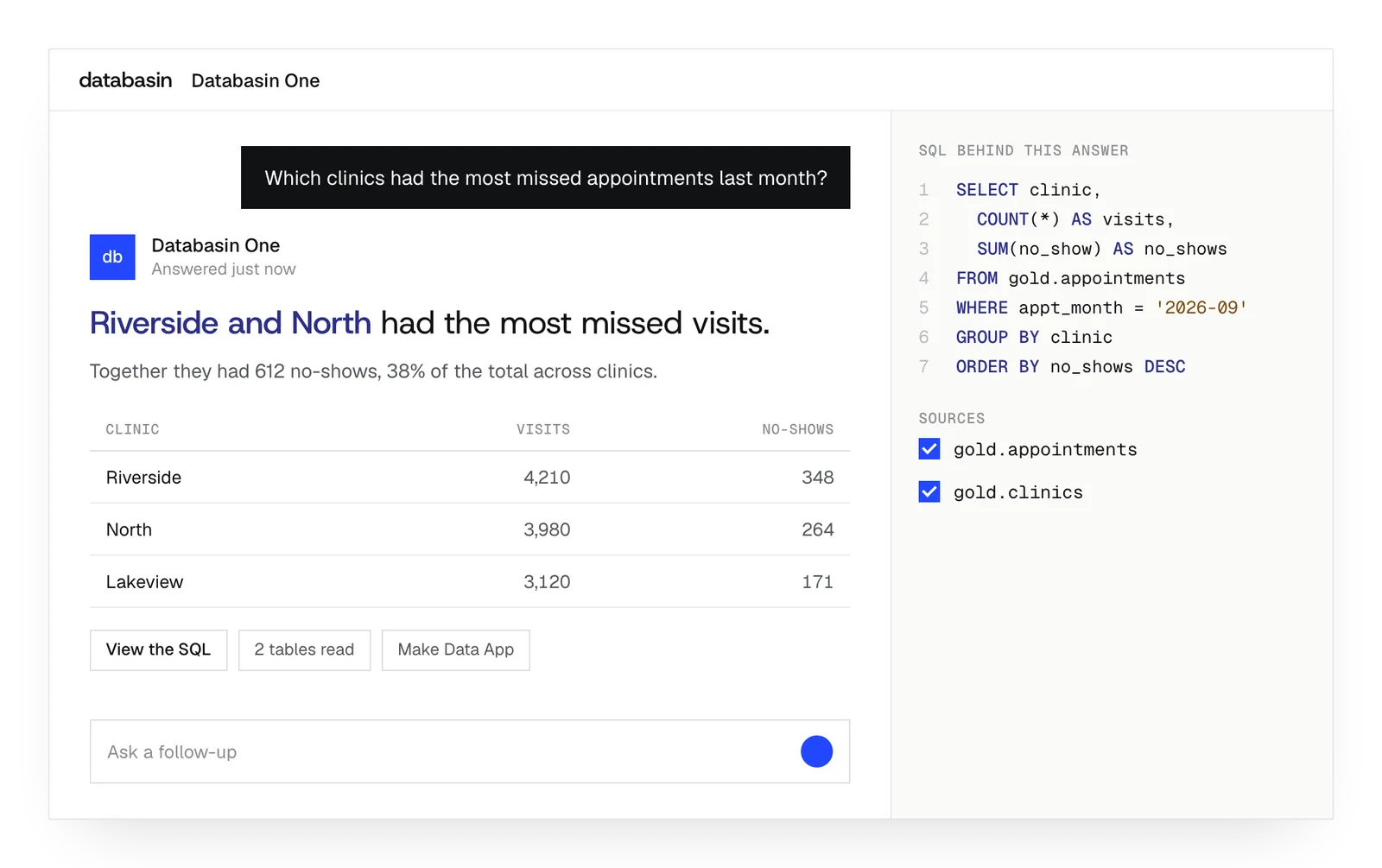
Apply local mappings and business definitions before records reach analysis.
Design, Build, Run
We take responsibility for the work from defining the outcome through implementation and ongoing support.
Design
We define the outcome, current processes and expected return with your stakeholders. A working example shows how Databasin would answer your business questions.
Build
We get your first use case live in 90 days. Communication, rollout, training and success measurement are included in the work.
Run
Choose the help you need after launch. We can run the solution for you, provide monthly support hours or stay on call.
What we prepare for your team
Source access
We help Epic and security owners define the connection and permitted data. The access design identifies the sources and records needed by the application.
Local mappings
We examine the local tables and fields required for the question. Their mappings reflect the Epic configuration your institution actually uses.
Shared measures
We define measures with the people responsible for finance, operations or research. Prepared views carry those definitions into the application and later analysis.
Working applications
We implement the application, review it against source records and train its users. They learn how to investigate a question and interpret its reporting period.
Reducing preparation for repeated cohort reviews
Scheduled preparation gives researchers a way to repeat a cohort review without rebuilding the extracts. We prepare the approved Epic records and a view based on the team's cohort criteria.
Researchers ask questions in plain language and inspect the SQL behind the answers. They judge whether the result addresses the question they are studying.
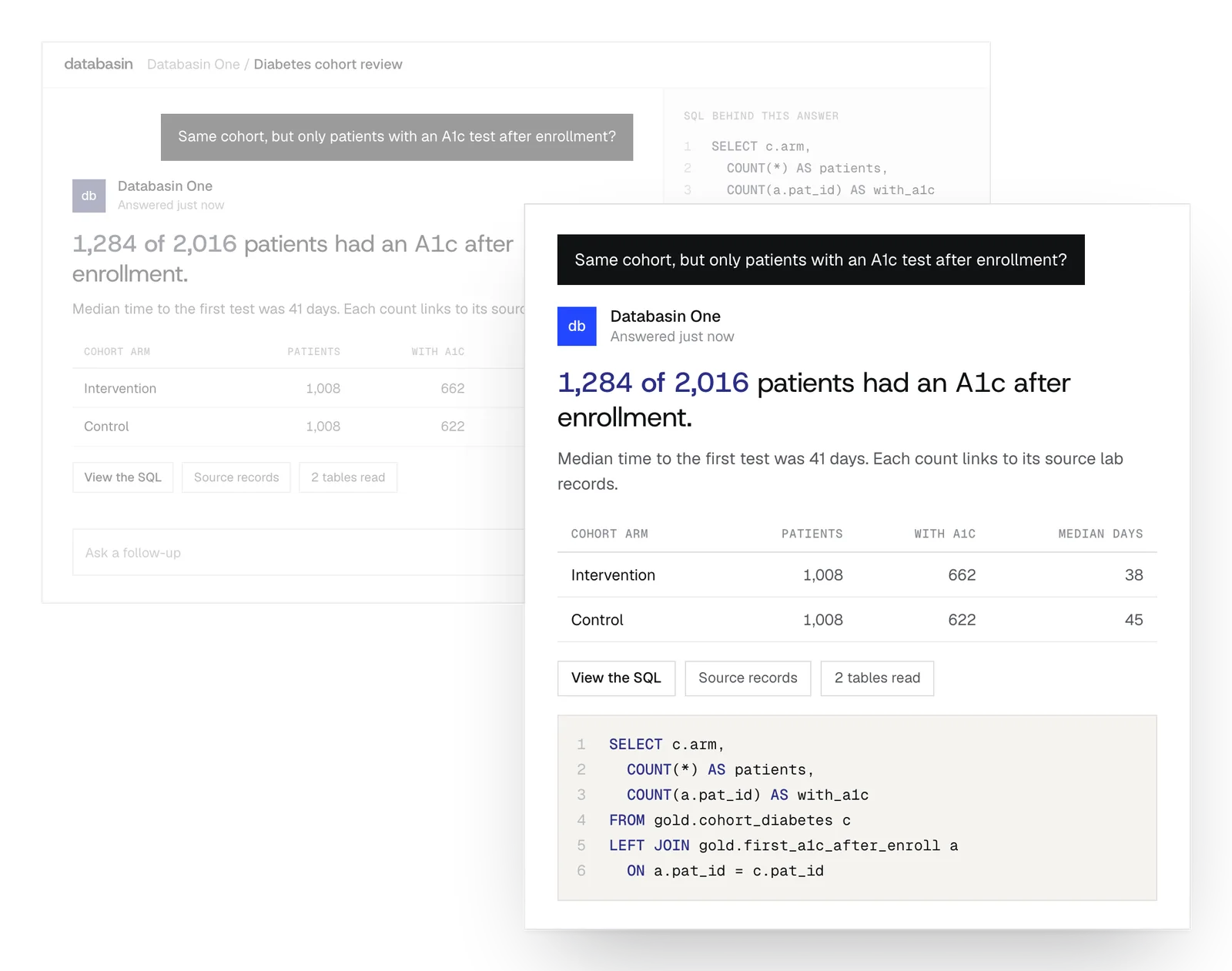
Epic reporting sources and access
| Source | Rule for the design |
|---|---|
| Clarity | Provides nightly reporting data. Reviews reflect the records available at the last refresh. |
| Caboodle | Reporting coverage varies with the institution's implementation. |
| FHIR | Supplements reporting sources with standard resources; some local fields needed for bulk analysis are unavailable. |
| Chronicles | Reporting sources support analysis without querying this operational database directly. |
What happens next
We would like to hear where your team wants to make progress with data and AI. We can discuss a project you have in mind or explore where Databasin could help with the work.
What happens next
Book a demo
Book a conversation about your organization and the work you want to improve. Questions about where to start are welcome.
Explore the opportunity
We show a working example that answers your business questions, then discuss what it would take to deliver it for your team.
Get the first result
After agreeing the first use case, we implement it with your team. We train the people using it and measure how it performs.
FAQ
How soon can we get Epic data into Databricks or Snowflake?
We can establish the schedule once the source access, deployment and local mapping work are clear. Your Epic and platform owners help us identify what is ready and what needs preparation. Databasin supplies the Epic connection capabilities; design establishes how to use them for the first result your team needs.
Can you help when access is stuck in security review?
Yes. We help prepare an access design that your security and technical owners can assess. It specifies the source, the data needed, how the connection works, where it runs and who will use it. Your institution approves the request, and we implement the work within the permissions it grants.
Do we need Caboodle before starting?
No. Clarity can supply the reporting records. We assess available Caboodle coverage against the application requirements at your institution. The source choice follows the local build, required information and measures the team will use.
Can we use Epic's FHIR APIs for the whole project?
FHIR supplies standard resources, which may not cover the local fields needed for bulk research and operational analysis. We establish the required records first. Clarity supplies broader analytical data, and FHIR can supplement it where its resources fit the question.
Does connecting Clarity give us live clinical data?
No. Clarity generally receives records in a nightly refresh. The application reflects what was available after that refresh. We account for this timing in the design and show the reporting period so people can interpret the information correctly.
Can our Epic analysts inspect the prepared data?
Yes. Analysts can inspect tables, definitions and the SQL attached to plain-language answers. They can compare a result with local records to check its mapping and calculation. Their findings help refine the measures the application uses.
Do you need unrestricted access to Epic?
No. We use the records and permissions approved by your institution. Your source owners help define the required data and access route. Clarity and Caboodle provide reporting data, so analytical work does not query the operational Chronicles database directly.
Can definitions and mappings be reused for later work?
Yes. A later application can use the governed views and definitions already prepared when they fit its question. Epic analysts review the local measures and tables for that use. We add or change the parts the new application needs.