Data and AI for higher education
Databasin helps universities use data and AI to improve finance, staffing, student support and research operations. We build the connections, analysis and recurring workflows on our platform, then help your people use them. Teams can ask their own questions, build Data Apps in plain language and share findings across departments.
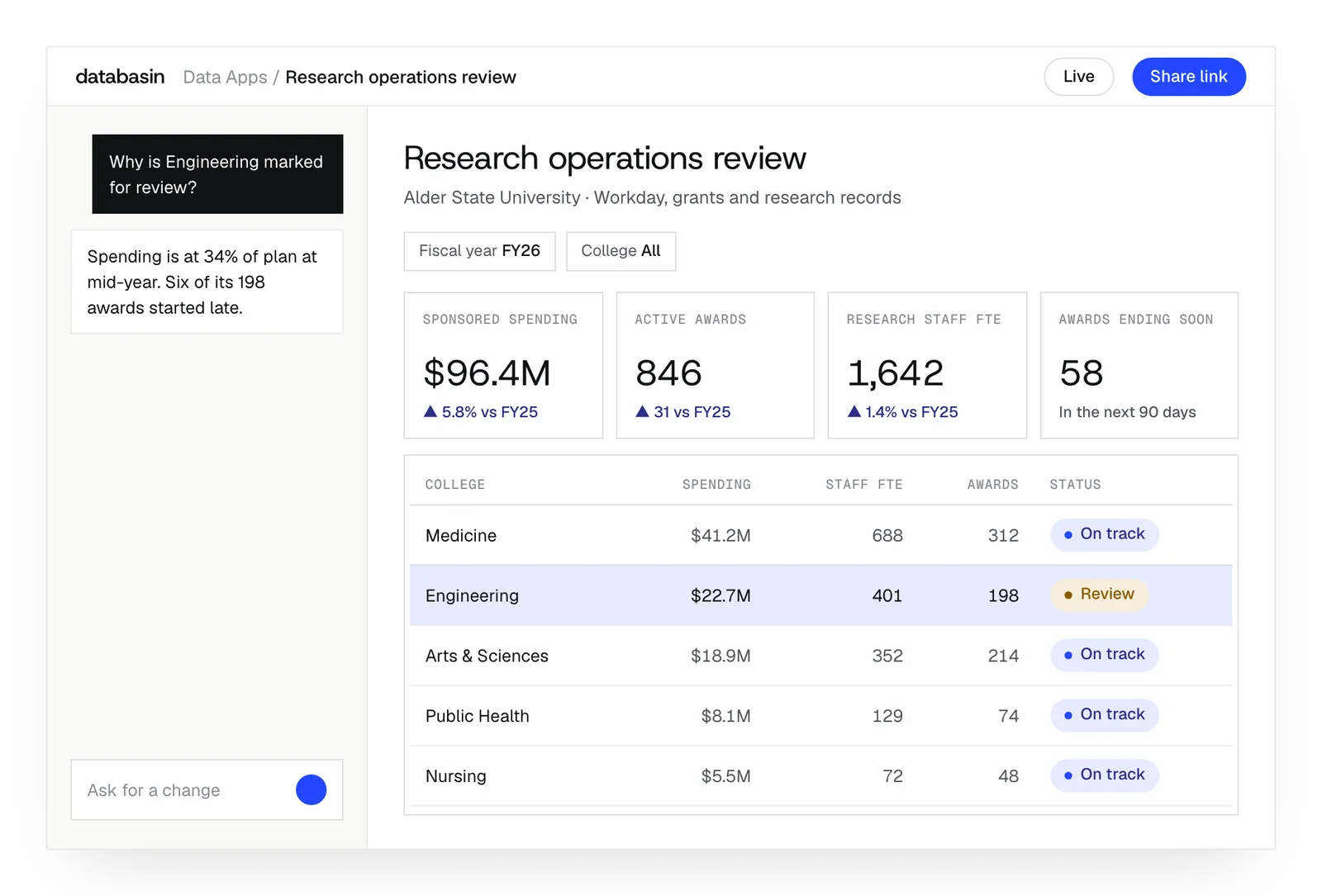




Results from customer work

- 20+ systems unifiedDatabasin brought WashU Medicine's financial data together.
- Infrastructure costs at 1/3 of the traditional approachWashU Medicine's result from changing its data infrastructure.
4%
Fewer dropouts
A higher-education institution also saved 4,000+ hours a year by finding at-risk students earlier.
“What used to take weeks or sometimes even months now happens in minutes.”
Shared analysis across university offices
We prepare data so university staff can answer questions that cross office boundaries. That includes connecting the records, building the calculations and establishing what each measure means with the people who use it.
Staff learn to explore the resulting views alongside their existing systems. Finance leaders, researchers and administrators can follow the same question through the data and discuss what to do.
The platform behind the work
People can ask questions, build Data Apps and automate recurring work using the data connected through Databasin.
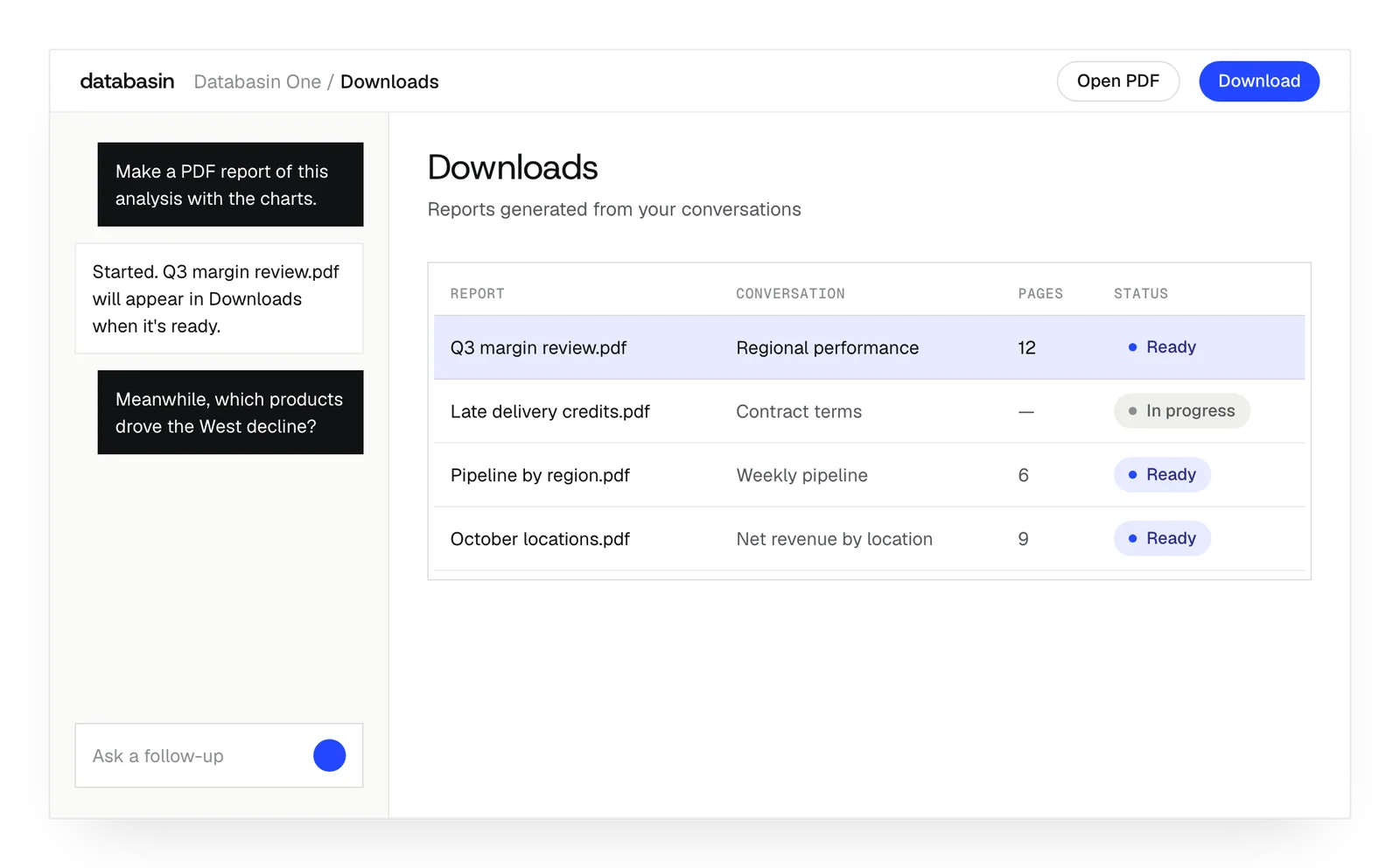
Investigate funding and staffing changes in plain language, with SQL to inspect.
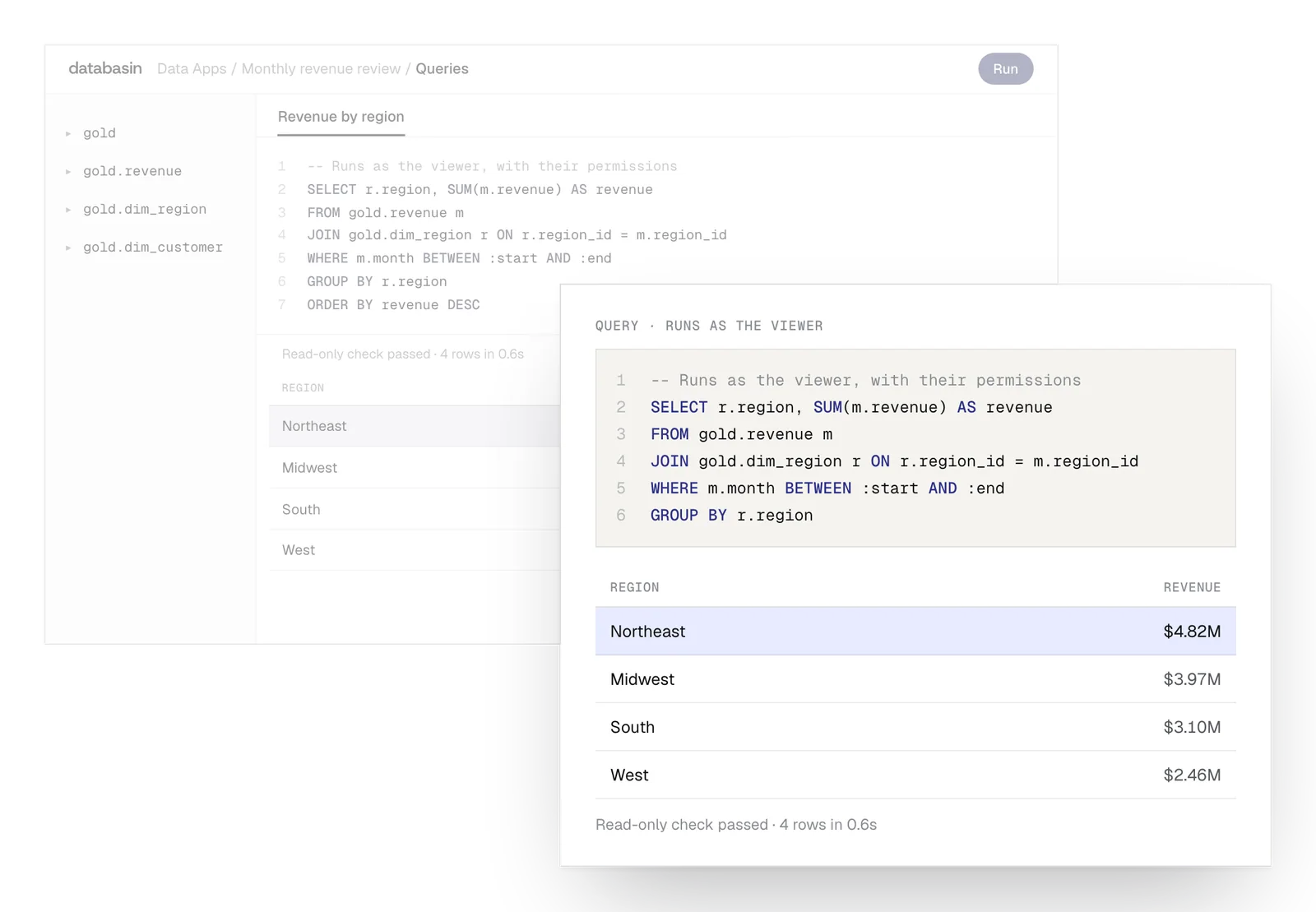
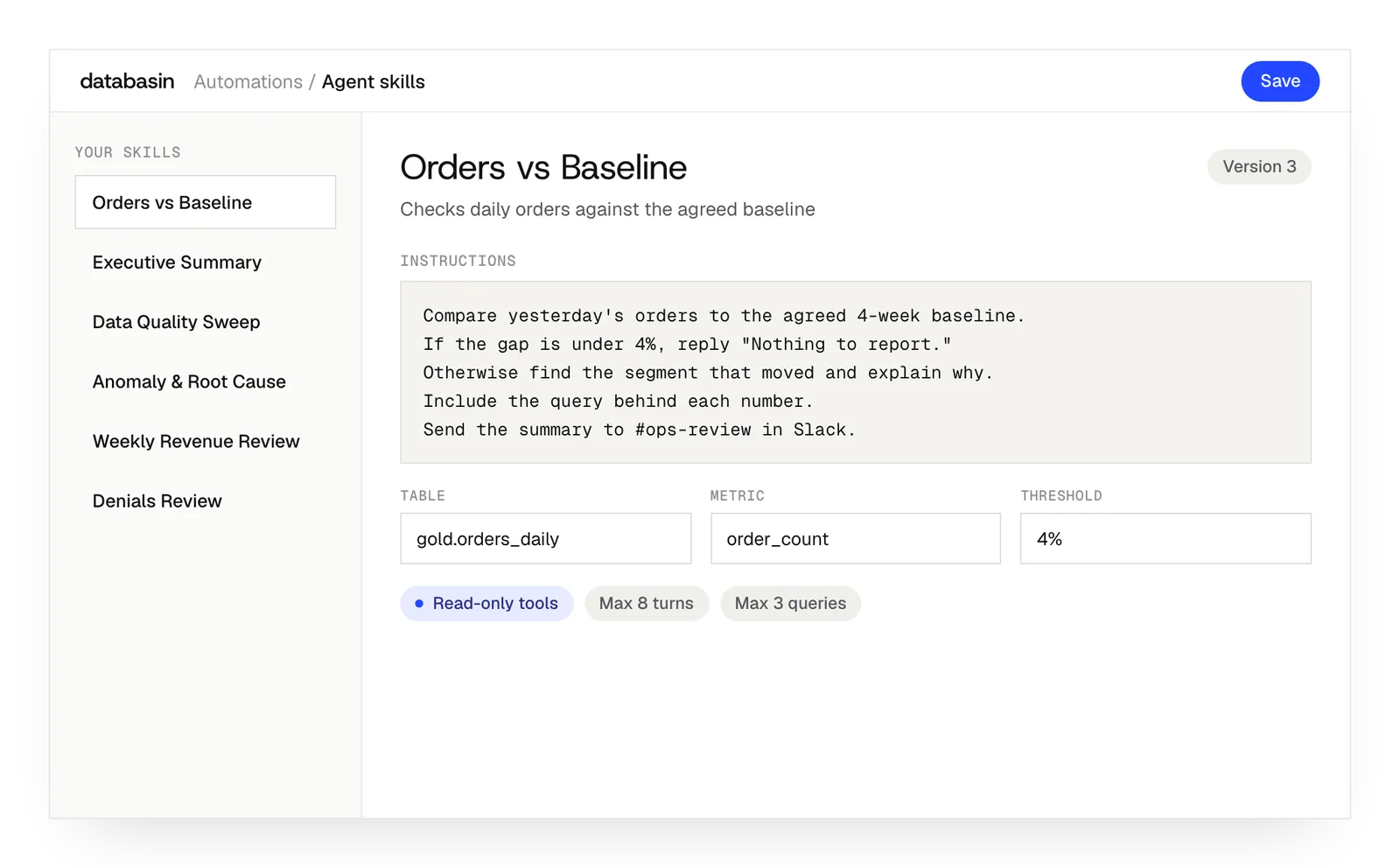
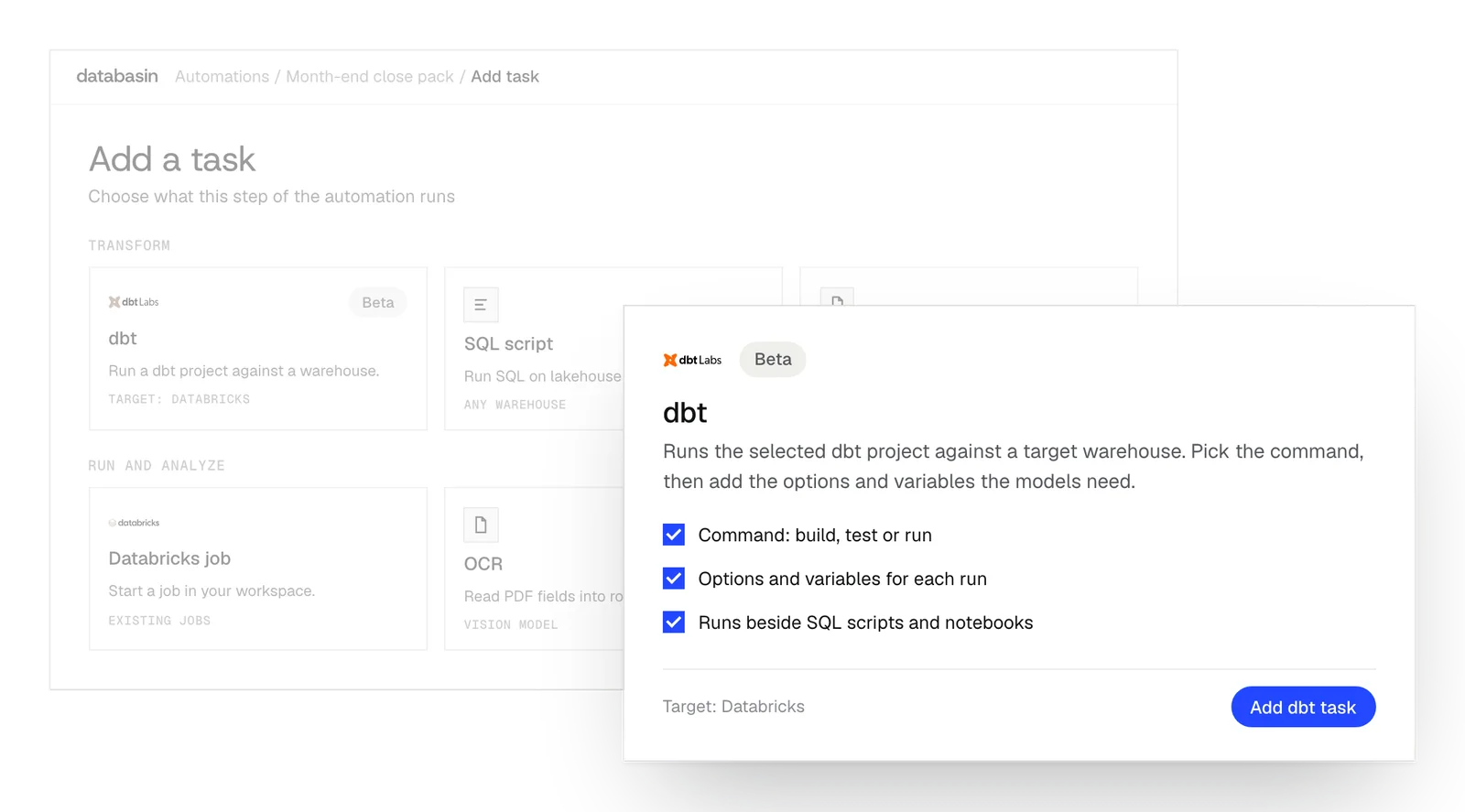
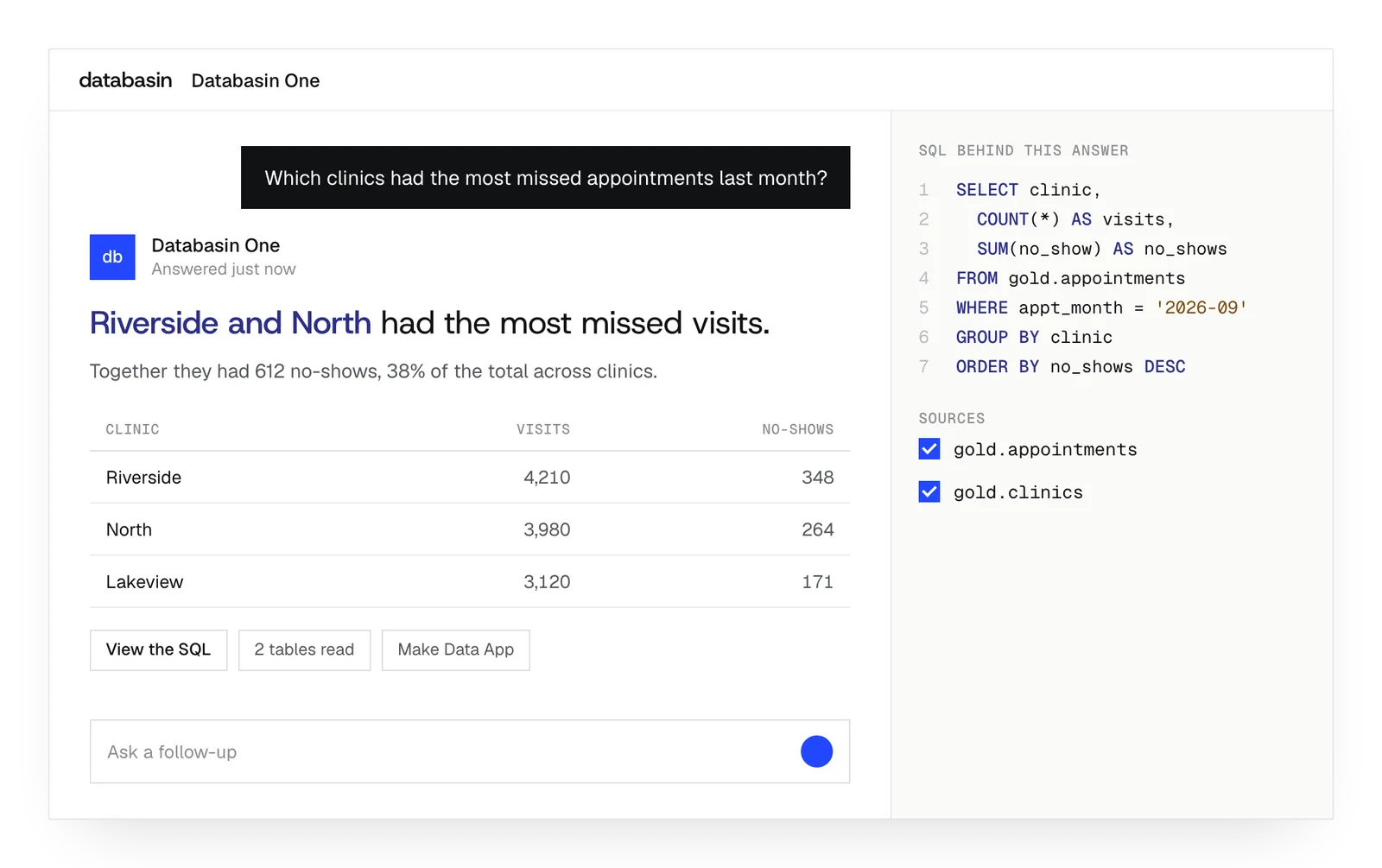
Give research and institutional analysis the source connections, history and definitions it needs.
Design, Build, Run
We take responsibility for the work from defining the outcome through implementation and ongoing support.
Design
We define the outcome, current processes and expected return with your stakeholders. A working example shows how Databasin would answer your business questions.
Build
We get your first use case live in 90 days. Communication, rollout, training and success measurement are included in the work.
Run
Choose the help you need after launch. We can run the solution for you, provide monthly support hours or stay on call.
Preparing a research funding review
Today
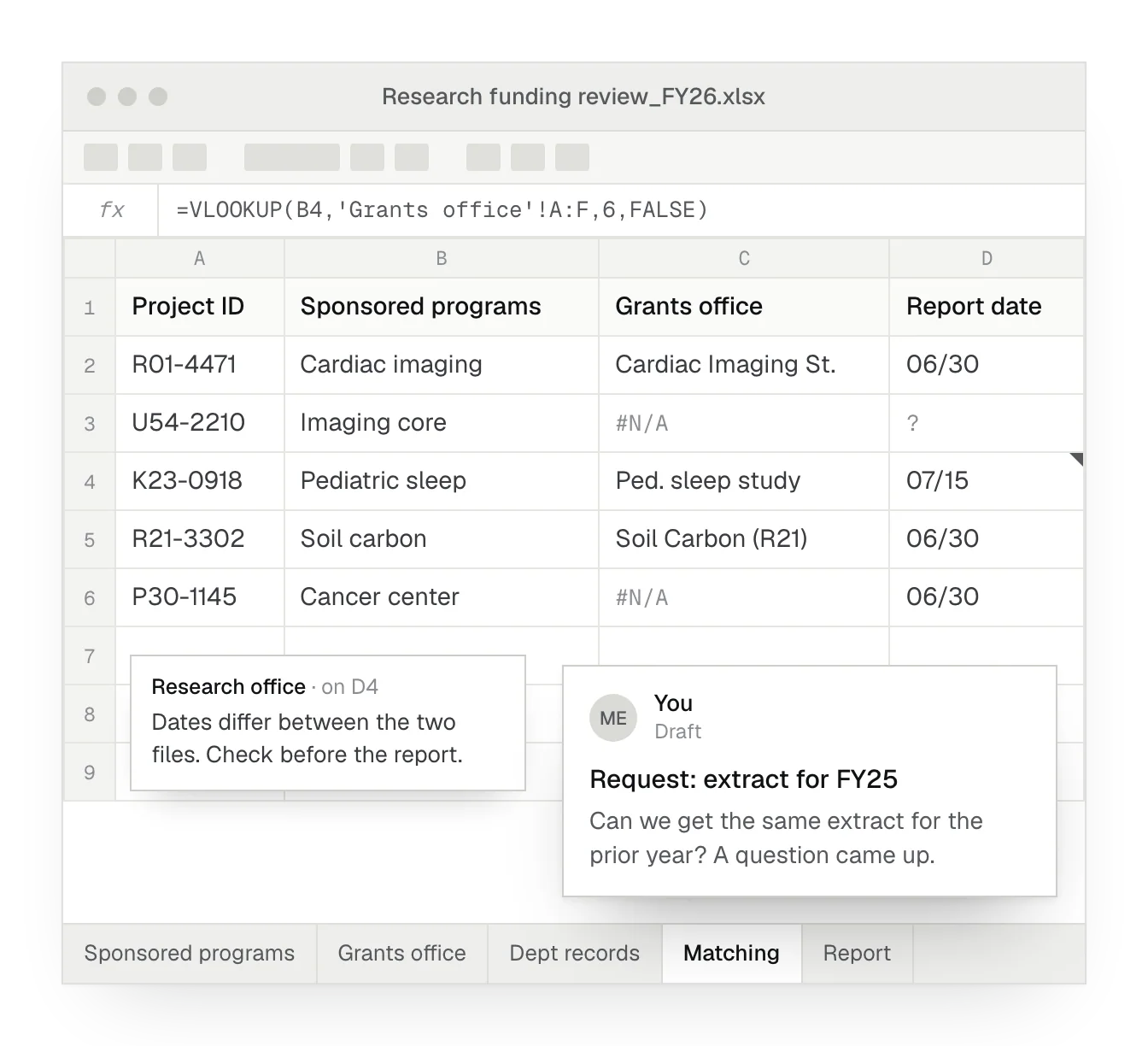
- Ask each office for its funding files and departmental records.
- Match projects across the files and check their reporting dates.
- Calculate the departmental figures and assemble the report for discussion.
- Order another extract to answer a question about a different period.
Redesigned
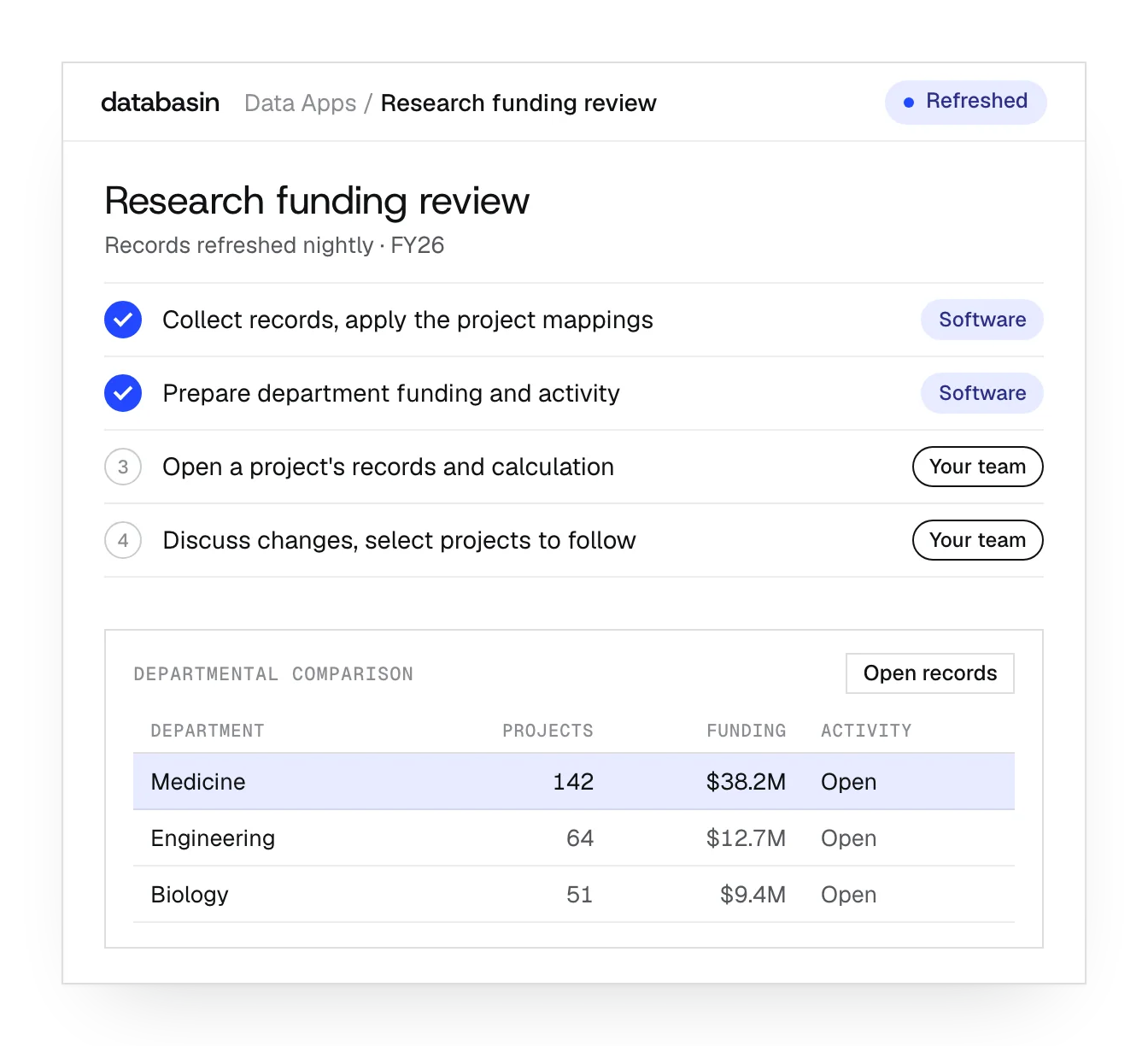
- SoftwareCollect the refreshed records and apply the established project mappings.
- SoftwarePrepare departmental funding and activity figures for the reporting period.
- Your teamInvestigate a project by opening its records and calculation.
- Your teamDiscuss the changes and select the projects that need attention.
Security for business data
Databasin gives your team controls for who can use business data and records of how they use it.
Access
Your organization manages the identities people use to sign in. Data permissions apply to their work, and investigation agents have read-only access to production sources.
Regulated data
For work involving PHI or HR data, our team helps your security reviewers examine the requirements. Databasin is HIPAA-ready, with a BAA available.
Where data sits
You can use our hosted service, run Databasin in your Azure environment or use it alongside Databricks, Snowflake or Microsoft Fabric.
Audit
An answer comes with its SQL for review. Your team can also examine query logs and lineage to understand the data behind it.
Work across campus and research
Finance
Finance can examine spending alongside the work it funds. We connect financial and activity records so departmental leaders can discuss those figures when deciding how to allocate resources.
Human resources
HR can compare hiring and retention before and after a reorganization. We preserve workforce history, including the roles and departments that applied to people during each period.
Student support
Advisers can examine which students may need help before deciding how to respond. We prepare information for recurring reviews that support staff's conversations and judgment about individual circumstances.
Research offices
Research offices can follow grants across teams and departments. We connect funding and activity records so colleagues can examine progress together and decide which projects deserve further attention.
Institutional and research source systems
Workday finance and HR
We use Workday's financial and workforce records, preserving effective dates so each comparison reflects the staffing and spending values for that period.
REDCap and research records
REDCap holds research surveys and databases. We prepare permitted records and the relationships needed to analyze them alongside other research and institutional sources.
Epic Clarity and Caboodle
We connect Epic reporting sources at academic medical centers and prepare local mappings and pipelines for repeated use in research analysis.
Institutional databases and files
We connect other campus records through the available API, file or database route, selecting the data needed to answer the institution's question.
What happens next
We would like to hear where your team wants to make progress with data and AI. We can discuss a project you have in mind or explore where Databasin could help with the work.
What happens next
Book a demo
Book a conversation about your organization and the work you want to improve. Questions about where to start are welcome.
Explore the opportunity
We show a working example that answers your business questions, then discuss what it would take to deliver it for your team.
Get the first result
After agreeing the first use case, we implement it with your team. We train the people using it and measure how it performs.
FAQ
How do we distinguish grant awards from the money already spent?
Keep a separate measure for each event. An award, a receipt and an expenditure describe different things, and each needs the appropriate date. We establish those definitions with finance and the research office before building the view. Staff can then compare funding with spending without combining them into a misleading total.
How can HR compare staffing before and after a department reorganizes?
Databasin preserves the Workday history needed to use each person's department and role at the time. We check those dates and relationships with HR when preparing the comparison. A later reorganization therefore does not move earlier staffing into today's departments unless that is the comparison the team intends to make.
Would Databasin replace our clinical trial management system?
The trial system keeps managing its study workflows. Databasin prepares research records for analysis with other institutional data. For OnCore or another trial system, we examine which records and access routes are available. We then establish how the study dates and identifiers relate to the other sources in that analysis.
Can researchers explore an approved dataset without requesting a new extract each time?
Yes. Researchers can ask further questions against a prepared view they have permission to use. Each answer includes SQL they can examine. The source access and definitions established for that view support the follow-up work, so a new question within its scope does not require another request for an extract.
How does Epic data become an OMOP research dataset?
The work maps Epic records to OMOP tables and standardized vocabularies, then validates them for the research. Databasin supplies the connections and an environment to run these transformations. The intended study determines which mappings and checks are needed, with researchers involved in establishing whether the resulting dataset is suitable.
What needs to match when REDCap and Epic data are analyzed together?
Records need a permitted link to the same subject, event or study context. A matching identifier is not enough if the dates or field meanings differ. We establish those relationships with researchers and source owners, retaining the context that makes the combined records useful and allows the team to interpret them.
What happens when scheduled data preparation fails?
Run history and task logs let the operating team identify the failed step; pipelines also support retries. We agree who monitors the work and responds to problems as part of the operating arrangement. That includes Databasin's continuing support, so the offices relying on a dataset know who handles a failed run.
Does the university need to run its own cloud environment?
No. Databasin can host the environment, or the institution can deploy it in its Azure tenant. We discuss source access, setup and ongoing operation with the data and security teams. Those requirements determine the appropriate arrangement and the responsibilities that each team takes on with it.