A governed data foundation for useful AI
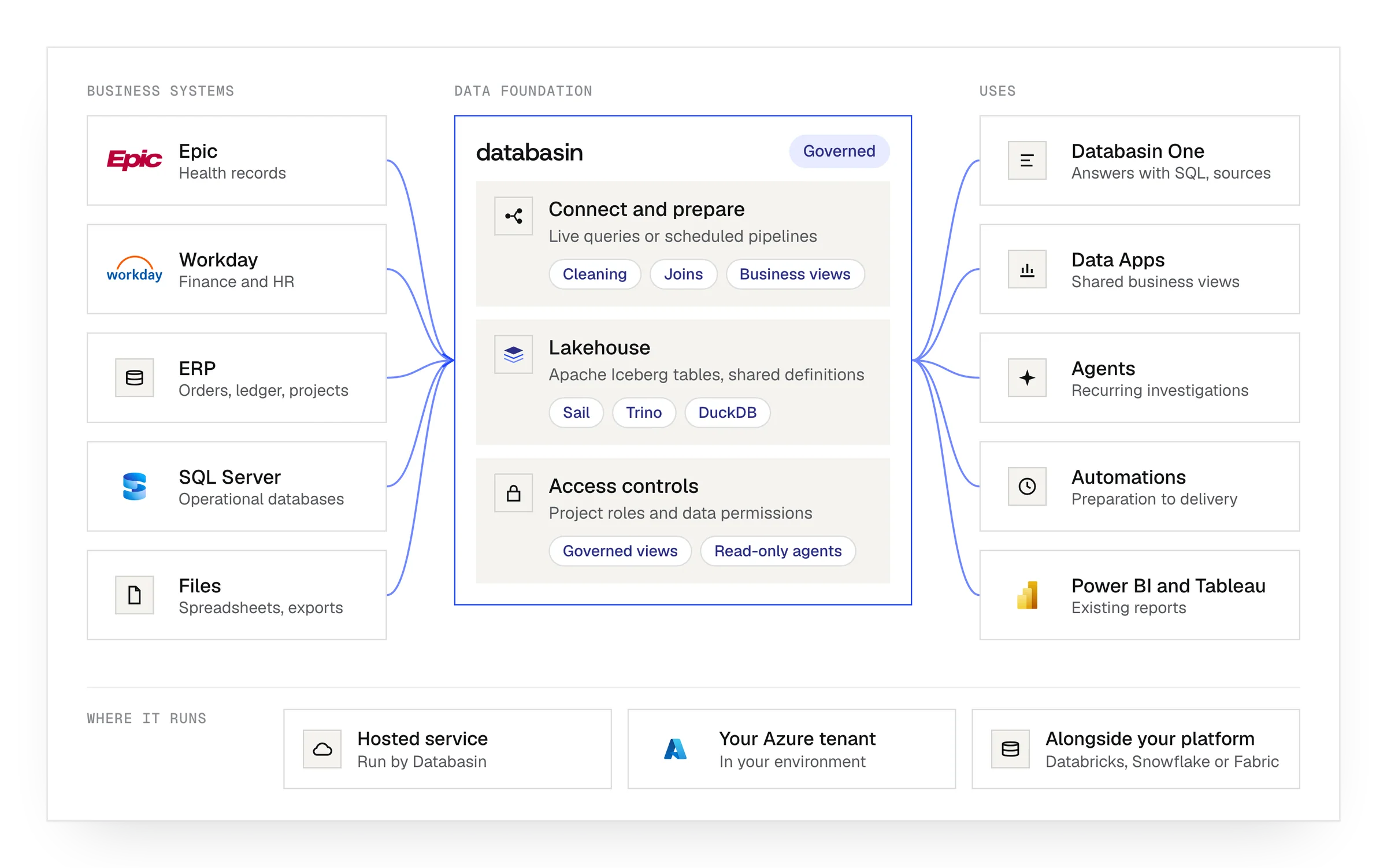
Databasin connects and prepares business data for reports, automated workflows and AI questions. Your team can use shared measures across those activities, with access set for the work involved. We implement the connections, business views and engines behind that capability and support the foundation as your organization's needs change.




Prepare data for the work ahead
Design, Build, Run
We take responsibility for the work from defining the outcome through implementation and ongoing support.
Design
We define the outcome, current processes and expected return with your stakeholders. A working example shows how Databasin would answer your business questions.
Build
We get your first use case live in 90 days. Communication, rollout, training and success measurement are included in the work.
Run
Choose the help you need after launch. We can run the solution for you, provide monthly support hours or stay on call.
Results from customer work

- 20+ systems unifiedDatabasin brought WashU Medicine's financial data together.
- Infrastructure costs at 1/3 of the traditional approachWashU Medicine's result from changing its data infrastructure.
18%
Higher grant proposal success
Measured at a research institution working with Databasin.
“What used to take weeks or sometimes even months now happens in minutes.”
Security for business data
Databasin gives your team controls for who can use business data and records of how they use it.
Access
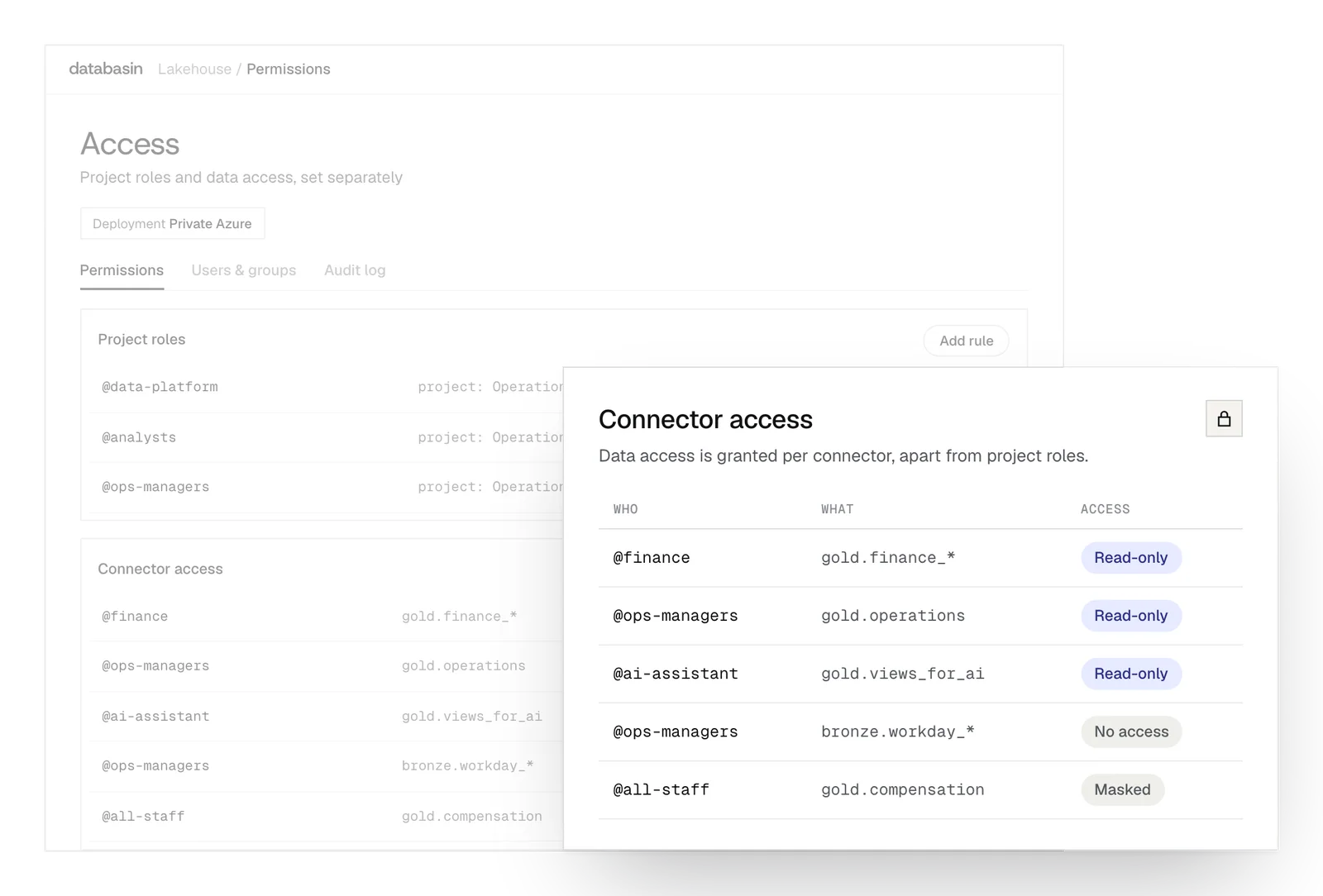
Your organization manages the identities people use to sign in. Data permissions apply to their work, and investigation agents have read-only access to production sources.
Regulated data
For work involving PHI or HR data, our team helps your security reviewers examine the requirements. Databasin is HIPAA-ready, with a BAA available.
Where data sits
You can use our hosted service, run Databasin in your Azure environment or use it alongside Databricks, Snowflake or Microsoft Fabric.
Audit
An answer comes with its SQL for review. Your team can also examine query logs and lineage to understand the data behind it.
Tools for maintaining the foundation
SQL editor
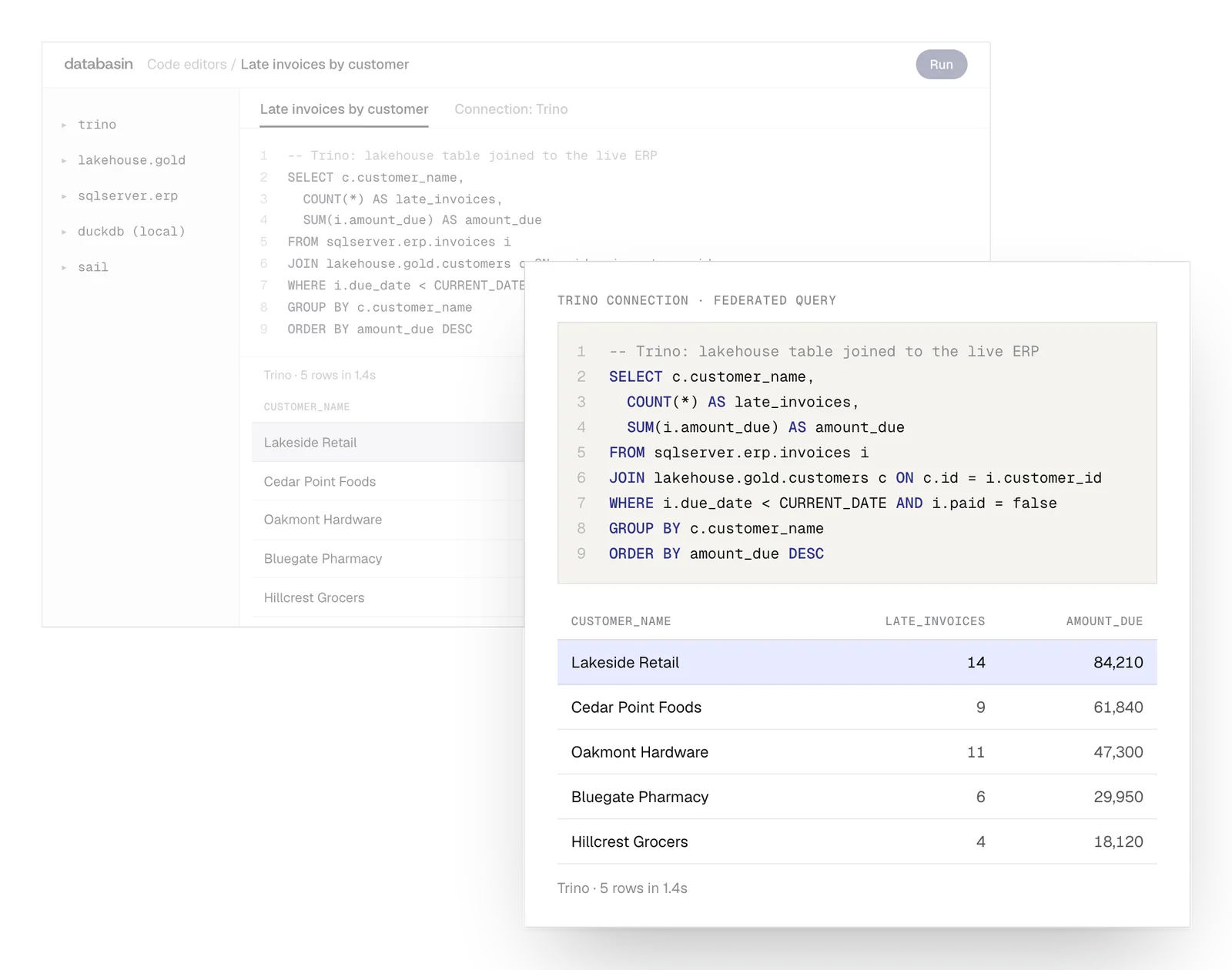
Write a query against the selected engine and inspect its returned records.
Notebooks
Run Python, PySpark and SQL analysis in notebooks against the project data.
Scheduled pipelines
Keep retained records updated on the schedule the business process requires.
Pipeline history
Examine the pipeline's source, target and status when reviewing a run.
Live queries
Read a supported source live before deciding which records to retain.
Shared definitions
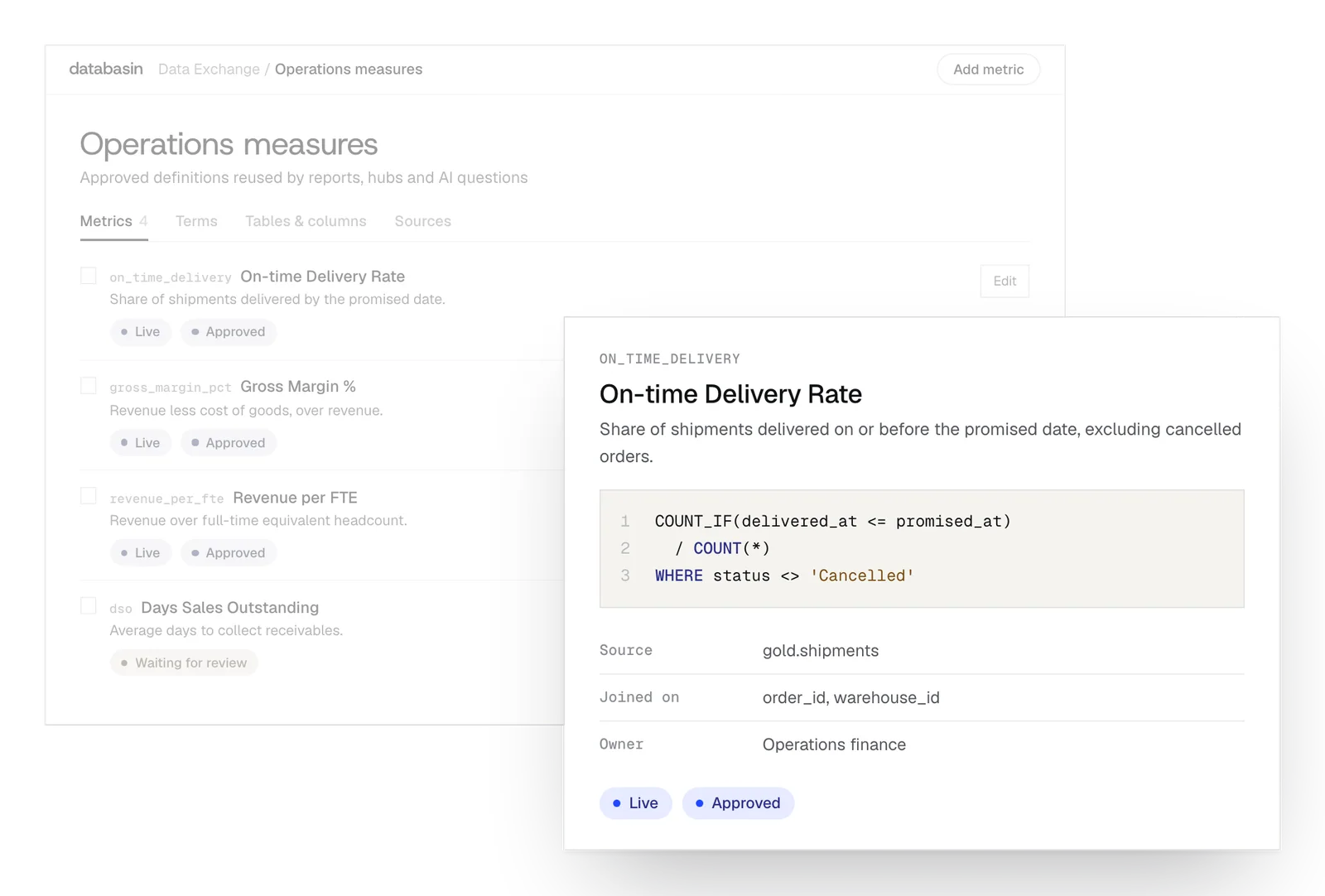
Give reports and AI questions access to the team's maintained business definitions.
Supporting work across your organization
Investigating financial performance
Examine a departmental financial change with the measure definition and query available beside the result for review.
Automating operational preparation
Refresh the views a scheduled investigation needs before it prepares findings for the team's next operational review.
Supporting research collaboration
Let authorized researchers examine the project data together using the permissions and notebooks prepared for their work.
What happens next
We would like to hear where your team wants to make progress with data and AI. We can discuss a project you have in mind or explore where Databasin could help with the work.
What happens next
Book a demo
Book a conversation about your organization and the work you want to improve. Questions about where to start are welcome.
Explore the opportunity
We show a working example that answers your business questions, then discuss what it would take to deliver it for your team.
Get the first result
After agreeing the first use case, we implement it with your team. We train the people using it and measure how it performs.
FAQ
Can Databasin run alongside Databricks, Snowflake or Microsoft Fabric?
Yes. Existing Databricks, Snowflake or Microsoft Fabric environments can stay in place. We map the needed records and workloads to their connection routes and identify what Databasin adds. The design then explains how the existing platform and the new application or workflow will support the intended business improvement.
What deployment choices are available?
Choose hosted service, deployment in your own Azure tenant or operation alongside an existing platform. We review the data classification and access requirements with your technical owners to establish the fit. The design includes infrastructure and operating responsibilities, plus the model-provider path for any AI work.
How do we choose between live queries and syncing?
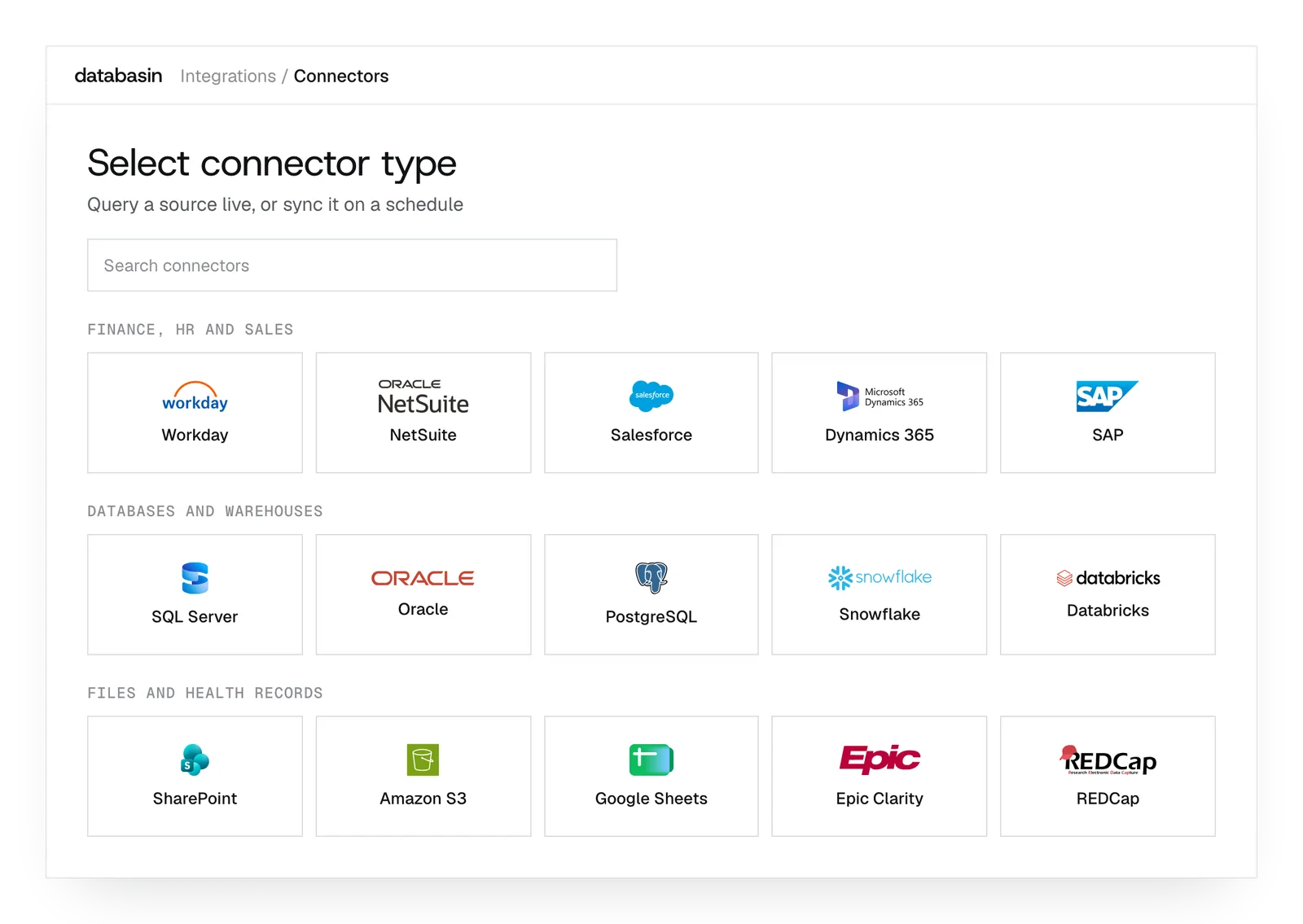
Sync records when the work needs retained history or repeated analysis of collected data. Query a supported source live when a direct read suits the workload. We decide from source behavior, available access and the intended use. The same project can use different approaches for different sources.
What is the difference between raw records and business views?
Raw records preserve what arrived from a source. Business views arrange prepared records into the measures and relationships people use. Preparation includes types, duplicates, joins and calculation definitions. Business owners establish those definitions so the resulting reports and AI questions reflect how the organization understands the work.
Can our analysts keep using Power BI or Tableau?
Yes. Power BI and Tableau can query the prepared data through supported connections. We review the engine and authentication behind existing reports before deciding what to keep. Further capabilities, including chat, Data Apps and automation, can use the foundation where they help answer another business need.
Does project membership automatically grant access to every connector?
No. Project membership and data access are separate. A member can have configuration rights without being able to query any records. Administrators assign connector permissions for the data that person needs. Those permissions, together with the project role, establish what the user can read and change.
Do we need to choose every engine at the start?
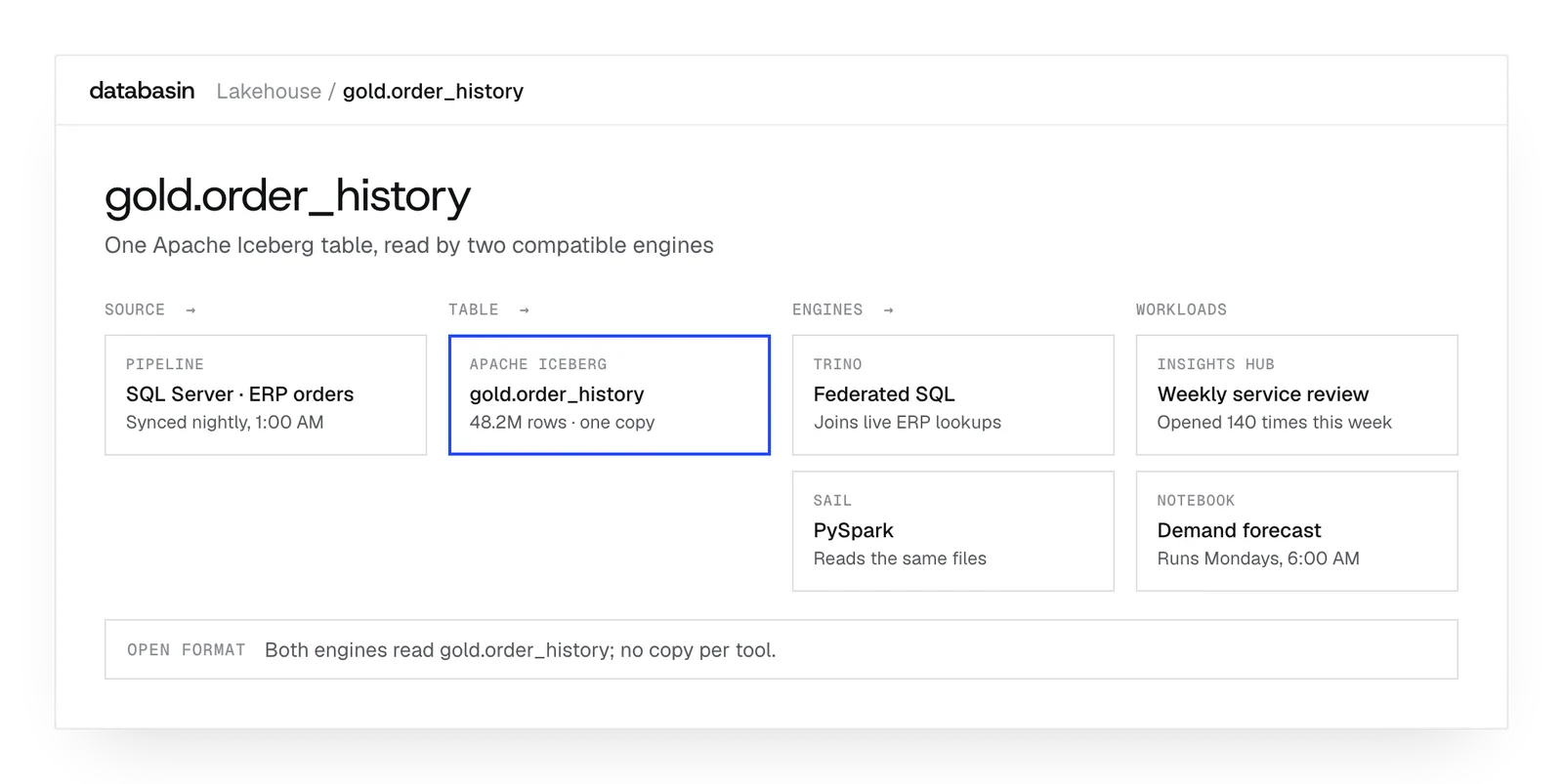
No. Choose an engine for the first workload, then add compatible engines when another use calls for them. Open tables allow that choice, but engines still differ in their SQL behavior and access controls. Review those differences against the intended task before using another engine on the data.
What does the technical review cover?
The review follows the proposed deployment from source connections through data flows and user access to ongoing operation. Your technical owners can examine those decisions with us. AI work includes the model-provider path as well. The trust center introduces the controls and evidence that support that discussion.