Epic data for your Databricks environment
Your clinical, finance and research teams can use prepared Epic data in the Databricks environment you already run. Databasin implements the source connections, local mappings and business views, then helps people use the result. Our team builds around your existing platform, with rollout, training and support included.
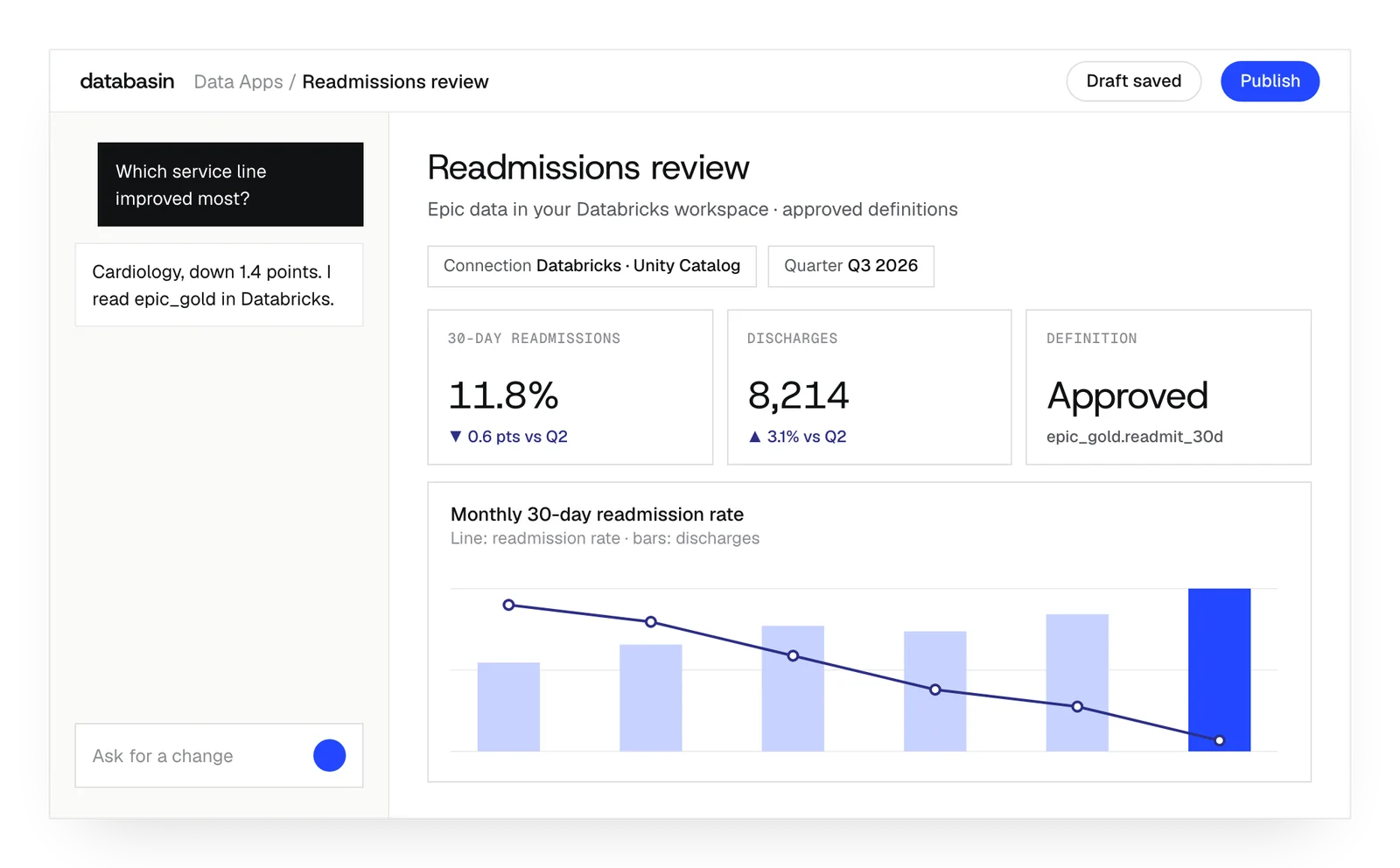





Epic source work for useful analysis
We build the extraction and local models needed to use Epic records in Databricks. Clinical measures can span several Clarity tables and depend on the institution's configuration. Our team prepares those relationships and applies the local rules before exposing the data to an application.
The resulting views support questions and reports, with tables and calculations an analyst can inspect. Databricks remains in the architecture. Databasin supplies the source work and applications that help departments use the prepared records in their own analysis.
Epic pipeline components
Reporting source access
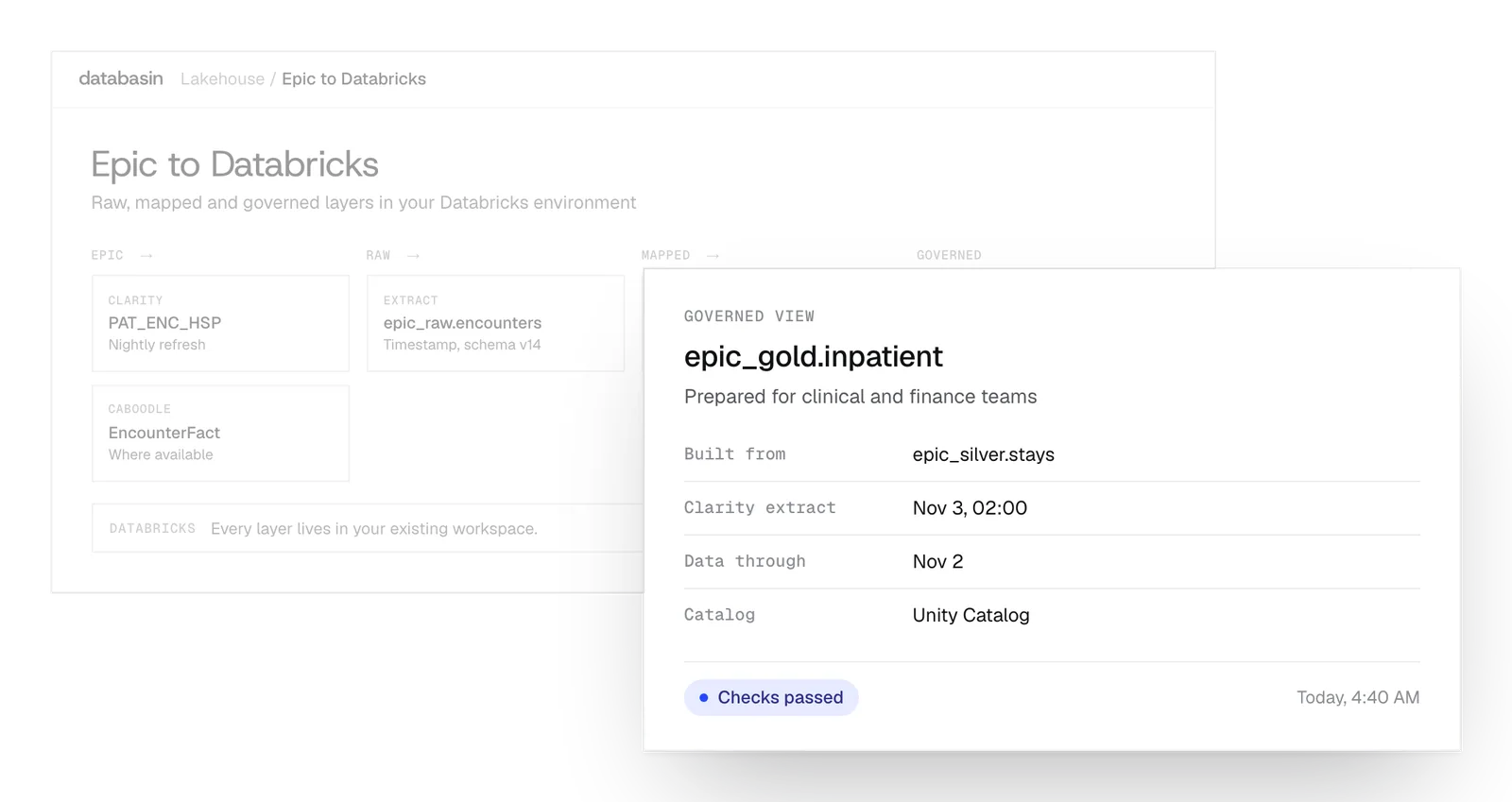
Read the required Clarity and available Caboodle records through access approved by your institution's owners.
Local transformations
Apply the institution's mappings and clinical definitions to prepare records for the analysis people need.
Governed business views
Provide the resulting measures to the applications, reports and notebooks used in your existing environment.
How does Epic data reach analysis?
Databasin retains the extracts in raw storage with a timestamp and schema history. It then applies the local mappings and calculations, exposing the results through governed business views. These steps prepare the records for users. They preserve Clarity's reporting cadence: its data still represents the nightly refresh available to the pipeline.
Delivery through to departmental use
Our team builds the application as well as the source path that supplies it. We draw on the experience of developing Databasin in production at WashU Medicine. The local Epic configuration and desired departmental result guide the implementation for your institution.
Rollout, communication, training and success measurement are included. We can then operate the solution, provide monthly support hours or stay on call. The department can use the application for its recurring reviews and investigate questions with the prepared records.
What happens next
We would like to hear where your team wants to make progress with data and AI. We can discuss a project you have in mind or explore where Databasin could help with the work.
What happens next
Book a demo
Book a conversation about your organization and the work you want to improve. Questions about where to start are welcome.
Explore the opportunity
We show a working example that answers your business questions, then discuss what it would take to deliver it for your team.
Get the first result
After agreeing the first use case, we implement it with your team. We train the people using it and measure how it performs.
FAQ
Can we retain the Databricks jobs already used downstream?
Yes. Existing Databricks jobs can be called as tasks in a Databasin automation. We arrange their stages with source preparation and later work so the jobs run in the sequence needed by the application.
Is Caboodle required for the Databricks connection?
No. Clarity is the primary extraction source. Available Caboodle data can contribute where it covers the required measures. We establish the source path from the local implementation and the records needed for the question.
Could a FHIR-only route cover our analytical requirements?
The answer depends on which records are needed. FHIR provides standard resources, while local fields and broader cohort or revenue-cycle questions may need Clarity. We examine that coverage when designing the source route.
Do we need to open analytical access to Chronicles?
No. Clarity and available Caboodle data supply this analytical route. Those reporting sources are separate from Chronicles, the operational database supporting clinical processes. The application uses the reporting records for its analysis.
What can your team do during the Epic security review?
We help identify the source connection, required records, deployment and intended audience. Your institution reviews and approves access. We implement within the permissions granted and the environment selected for the application.
How are changes from an Epic upgrade handled in the pipeline?
Raw extracts retain their schema versions. Databasin detects and logs structural changes during ingestion. The team can inspect a changed field, follow its mappings and address the effect before using the changed data downstream.
Can the same preparation include Workday alongside Epic?
Yes. We can prepare Workday history alongside Epic activity. The combined question determines the organizational relationships, reporting periods and calculations needed in the shared business view.
Does Unity Catalog read-in-place have the same status as this ingestion route?
No. Sail's Unity Catalog read-in-place route is in preview. Building Epic ingestion and models alongside Databricks is a separate architecture. We establish which route meets the source and application requirements during design.
Can this run with Databricks in our own Azure tenant?
Yes. Databasin Private can run with your Azure storage, keys and network. We design its connections alongside your current Databricks deployment, including the source access and application routes needed for the work.
How will users examine the measures supplied by the pipeline?
Analysts can inspect the prepared tables and calculations through their supported tools. Business users can explore applications or ask plain-language questions. Databasin One attaches the source and SQL to the answer for review.
Discuss Epic data in Databricks
We can talk through how your organization wants to use Epic data in Databricks and what is already in place. Our team can explore the remaining source and application work with you, wherever the project stands.