Retail and grocery analytics and AI
Databasin helps retail and grocery teams investigate stock, sales and customer activity so managers can decide where to act. We connect the relevant data, build the analysis and automate recurring reviews. Our team implements the work alongside your existing systems and helps people use it.




Results from customer work

- 20+ systems unifiedDatabasin brought WashU Medicine's financial data together.
- Infrastructure costs at 1/3 of the traditional approachWashU Medicine's result from changing its data infrastructure.
18%
Higher grant proposal success
Measured at a research institution working with Databasin.
“What used to take weeks or sometimes even months now happens in minutes.”
Decisions across stores and departments
We build the analysis managers need to investigate shrink, inventory turnover, traffic and loyalty activity. The work uses records from the retail systems you already run. Our team connects those records and prepares the measures, then builds views managers can explore. A question about one store can lead into its products, sales and stock movement.
The platform behind the work
People can ask questions, build Data Apps and automate recurring work using the data connected through Databasin.
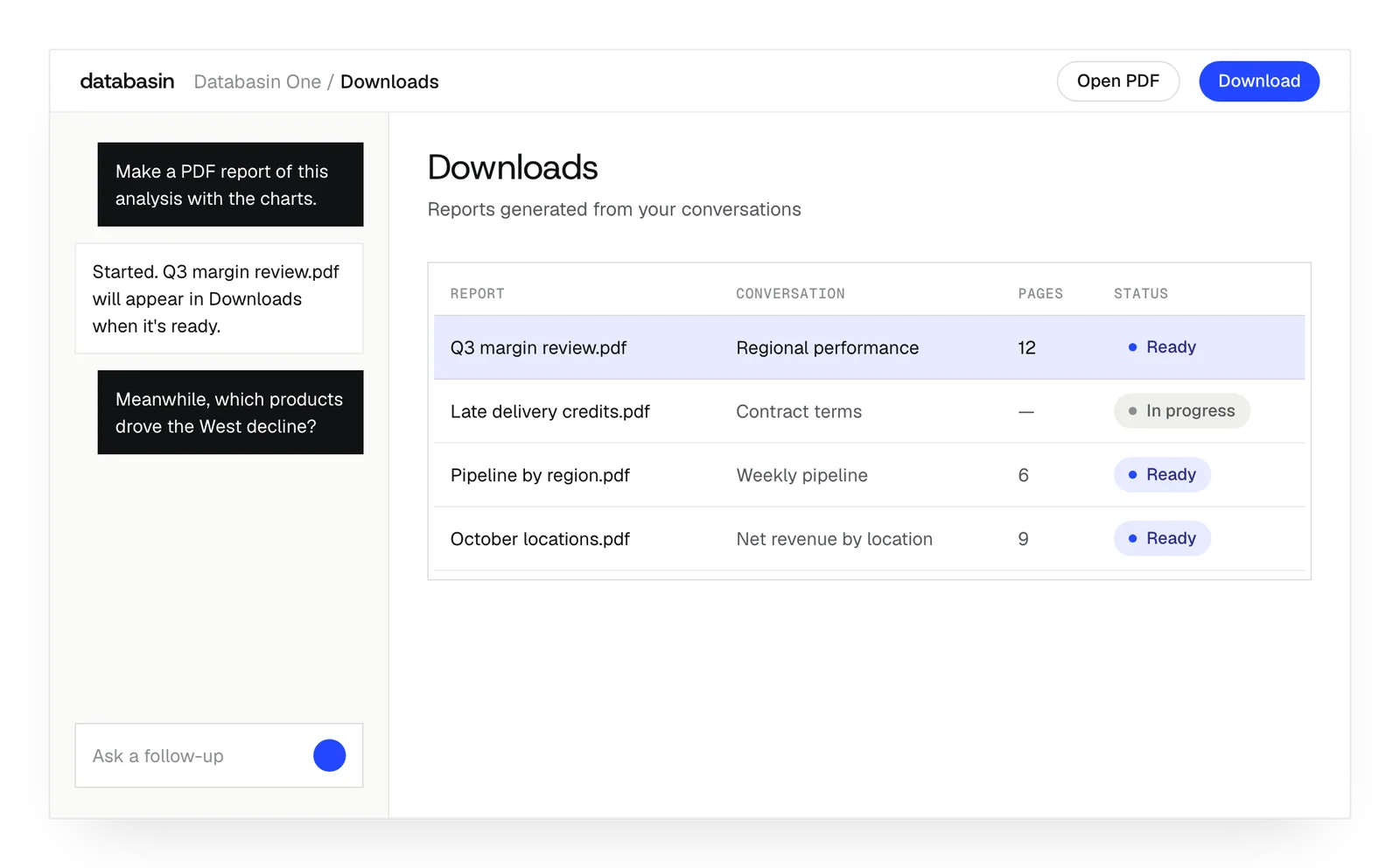
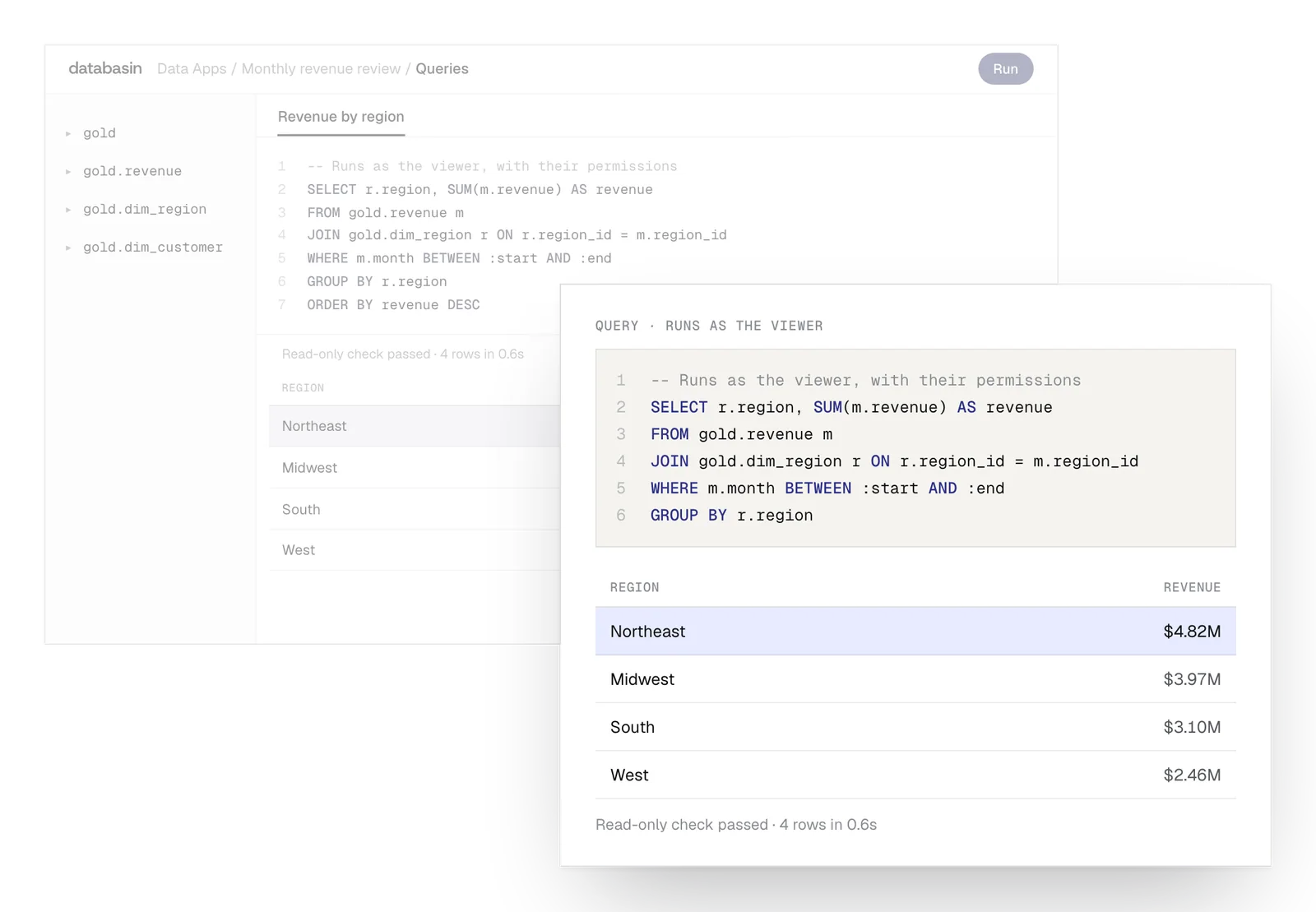
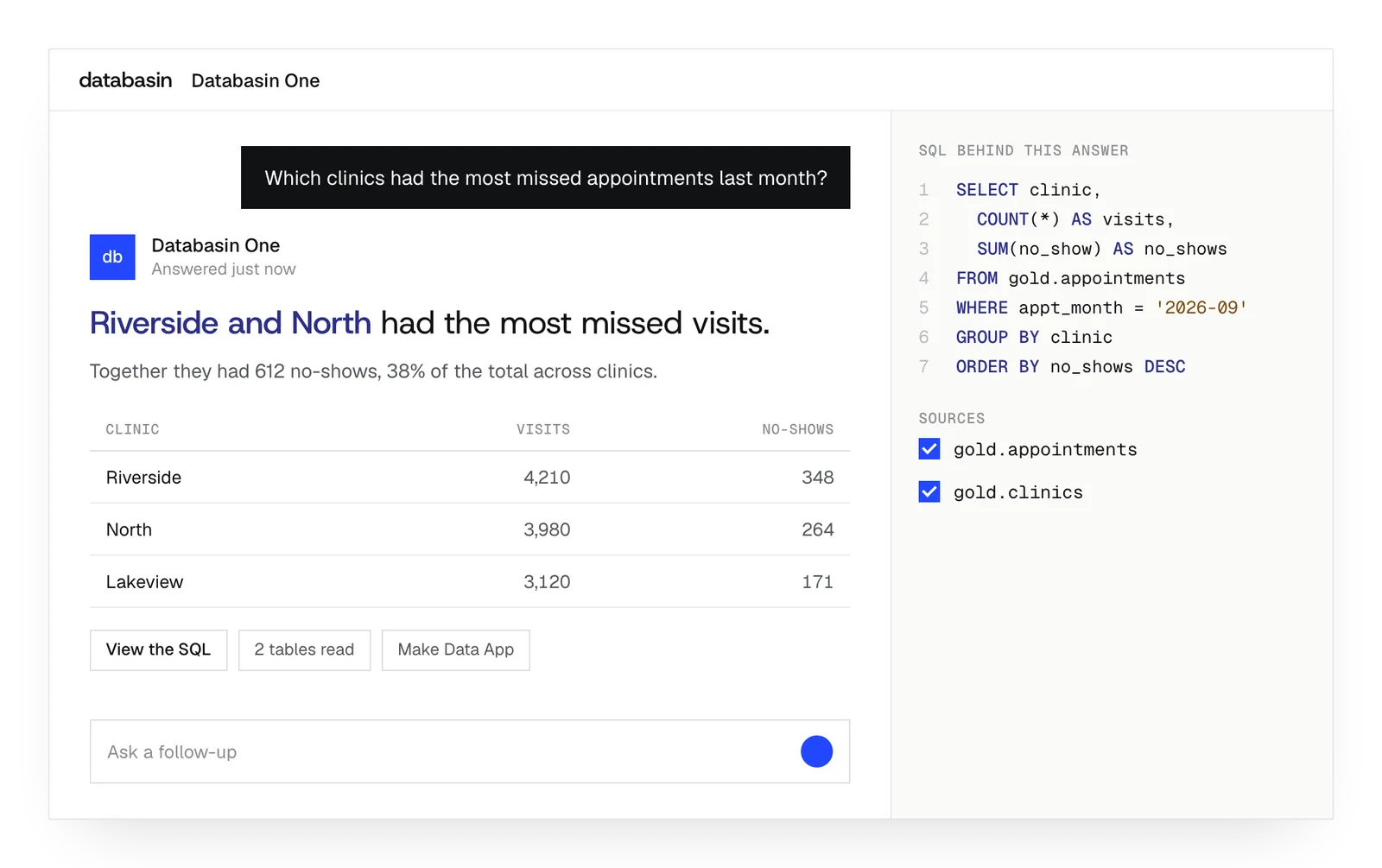
Ask about a store and see the source records and query that support the answer.
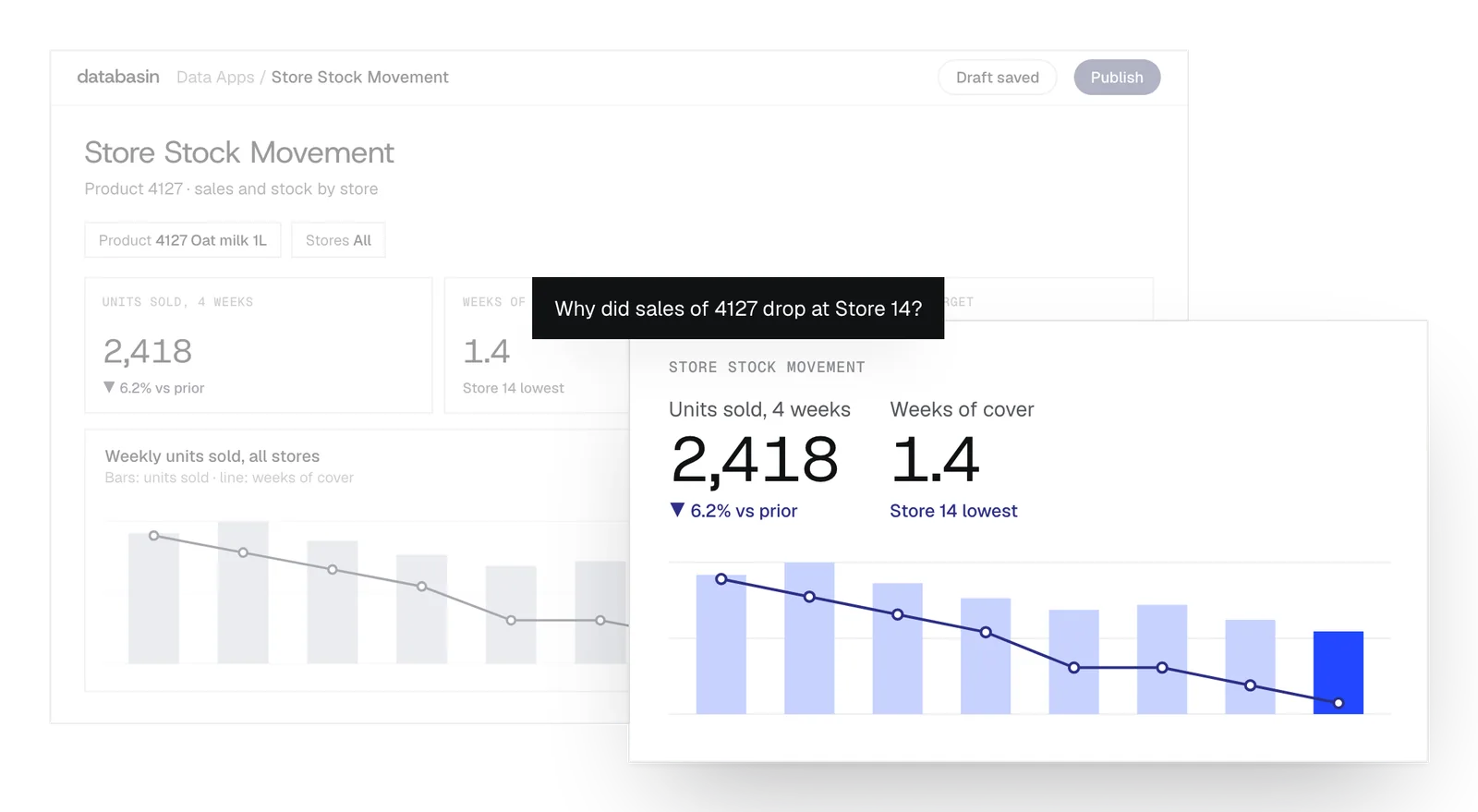
Give managers a view of sales and stock that they can explore by product and location.
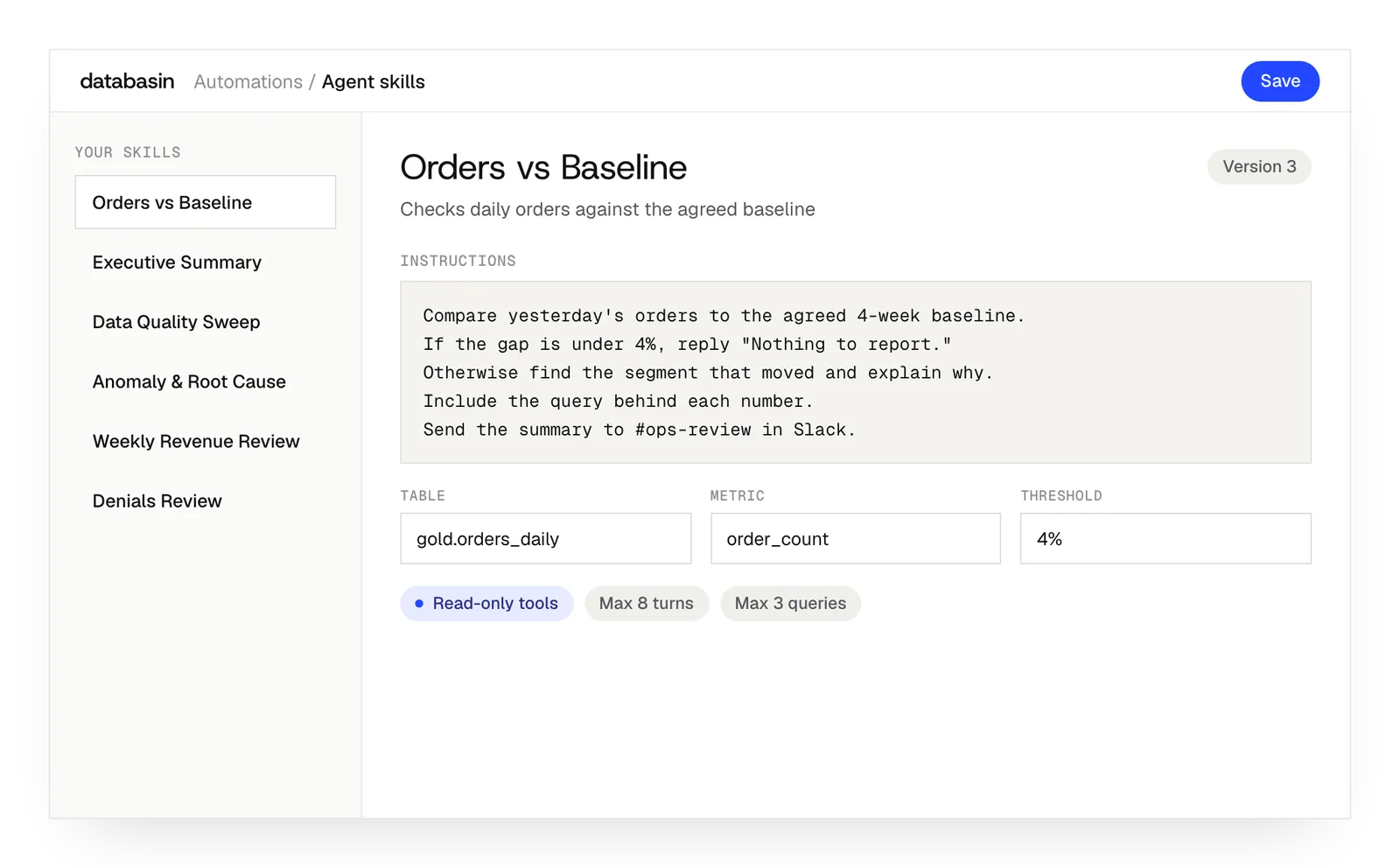
Run a stock or sales investigation against the baseline and instructions agreed by your team.
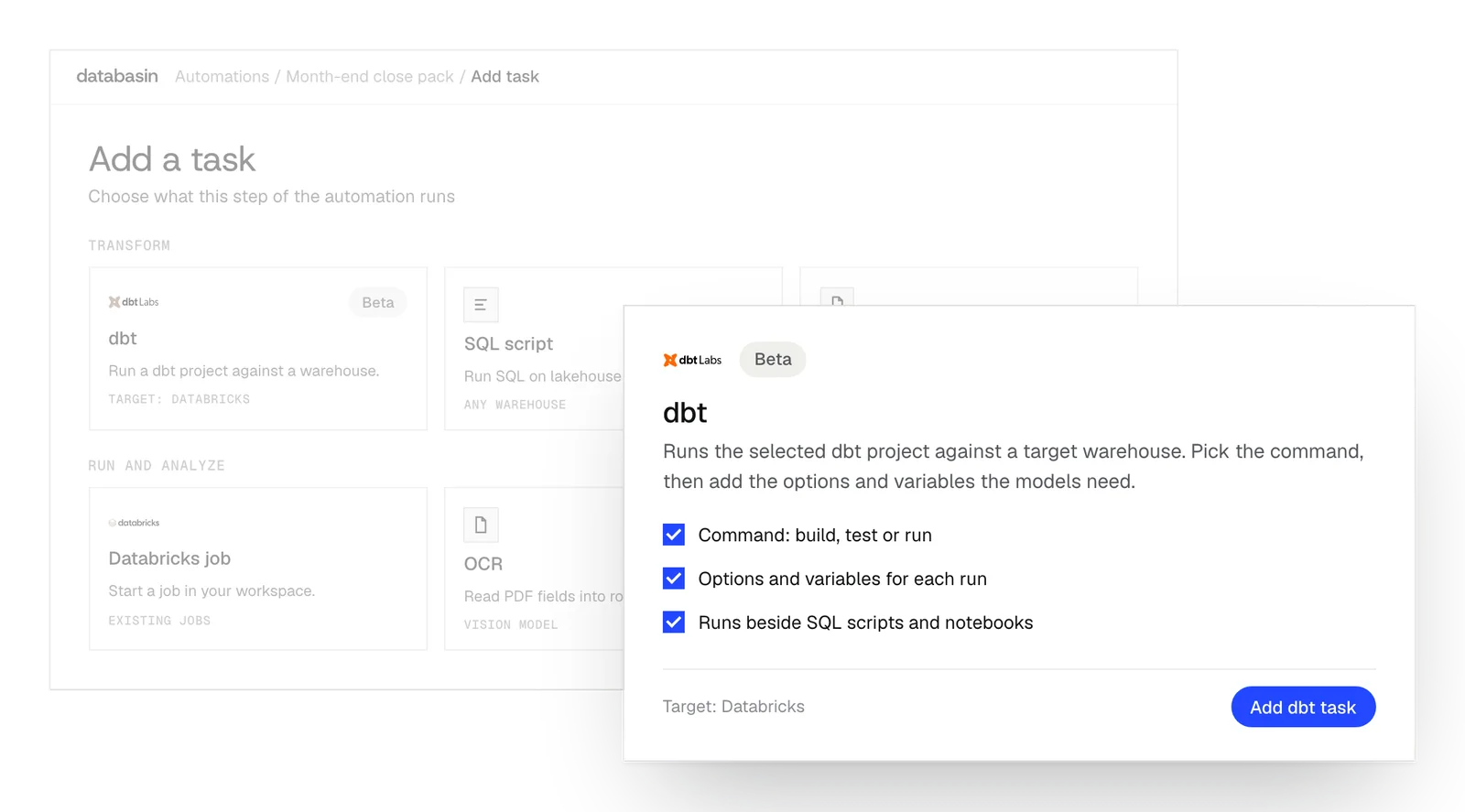
Prepare the data on a schedule and deliver the review to its intended recipients.
Prepare the product and store relationships that let the analysis use retail records together.
Design, Build, Run
We take responsibility for the work from defining the outcome through implementation and ongoing support.
Design
We define the outcome, current processes and expected return with your stakeholders. A working example shows how Databasin would answer your business questions.
Build
We get your first use case live in 90 days. Communication, rollout, training and success measurement are included in the work.
Run
Choose the help you need after launch. We can run the solution for you, provide monthly support hours or stay on call.
Investigating changes in store inventory
Reviewing stock movement across stores
Today
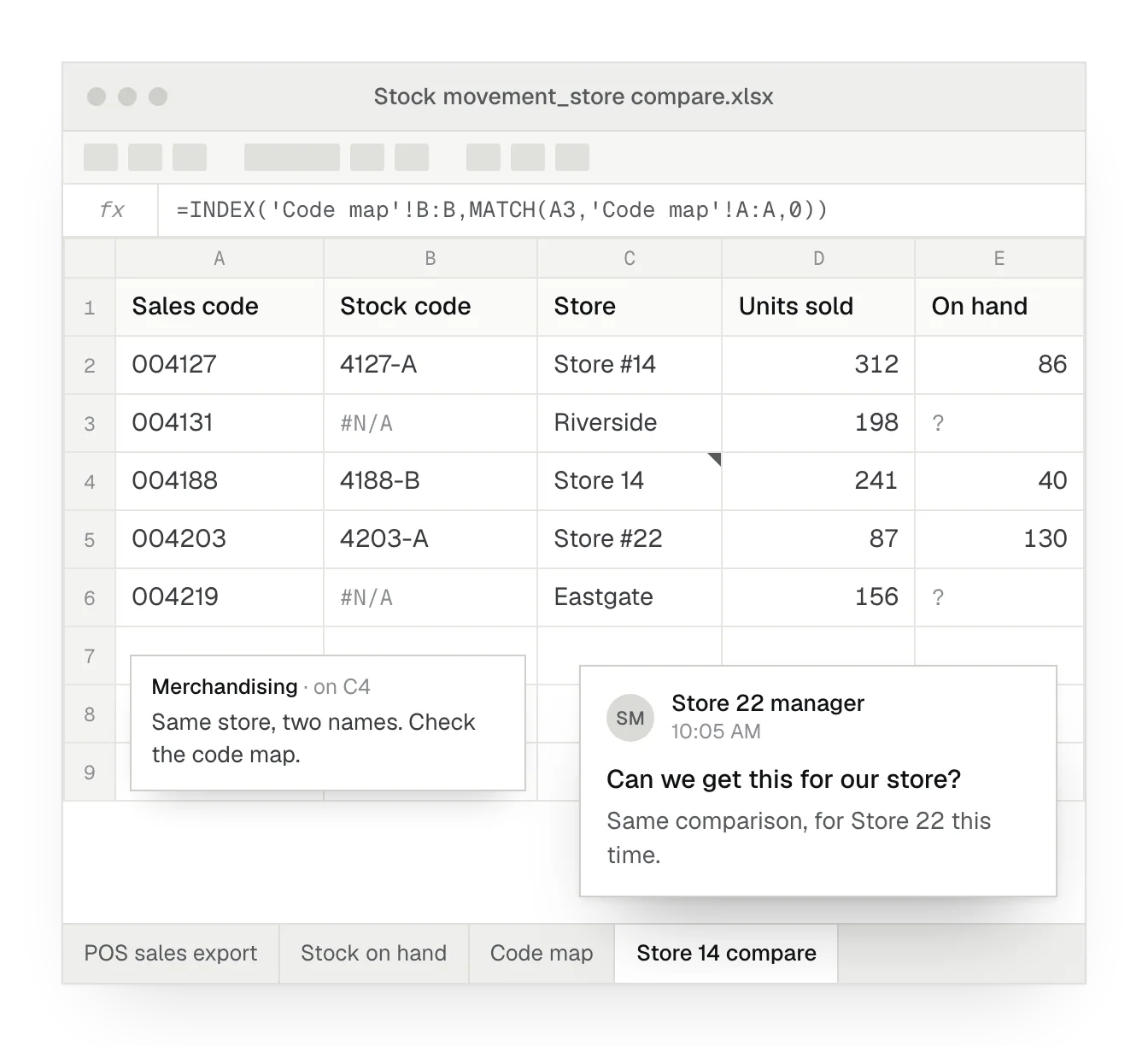
- Gather the sales and stock files needed for this review.
- Check which product codes and store names correspond across the files.
- Prepare another comparison when a manager asks about a different store.
Redesigned
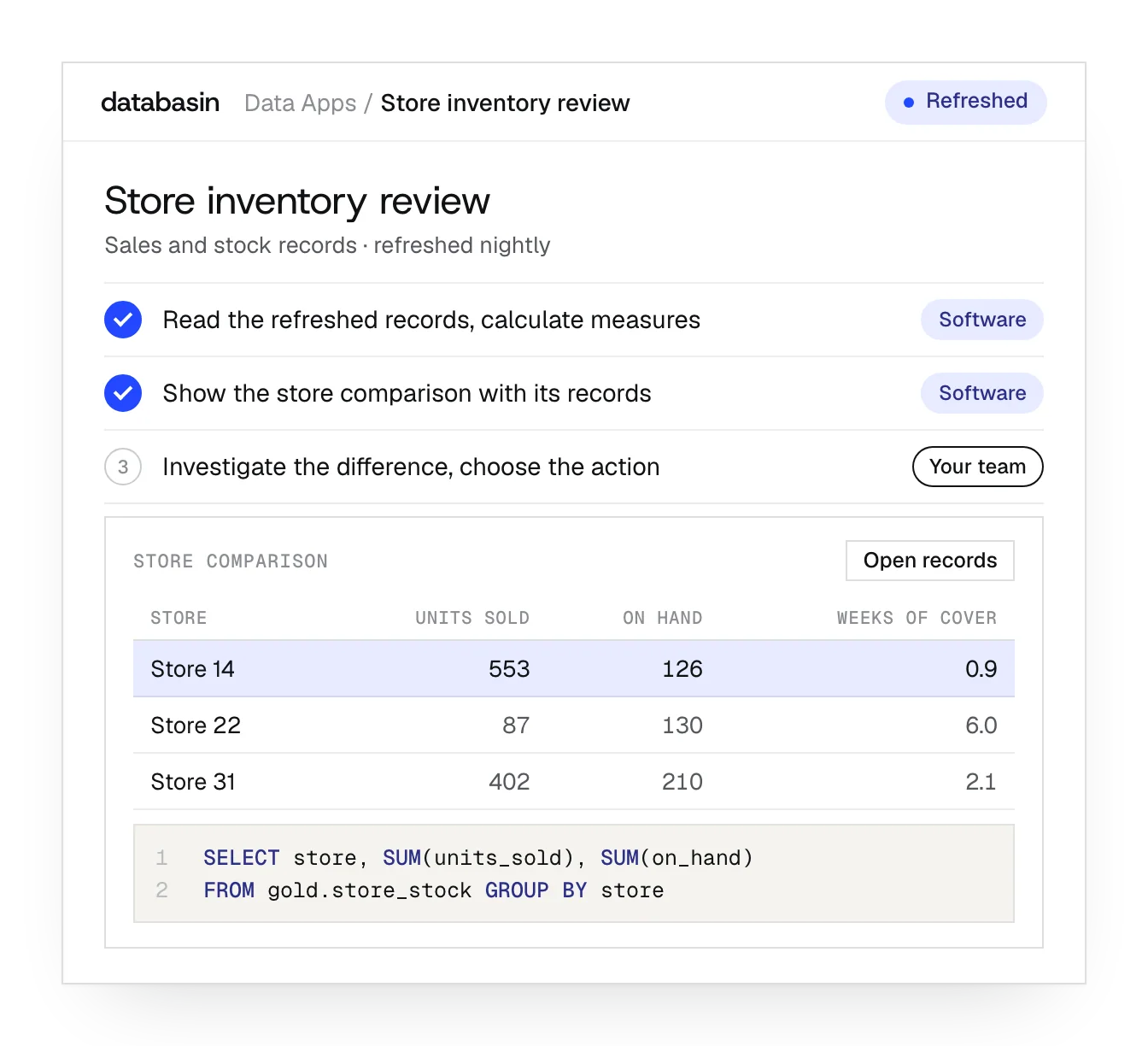
- SoftwareRead the refreshed records and calculate measures for the period.
- SoftwareShow the store comparison with access to its underlying records.
- Your teamInvestigate the difference and choose the action to take.
Security for business data
Databasin gives your team controls for who can use business data and records of how they use it.
Access
Your organization manages the identities people use to sign in. Data permissions apply to their work, and investigation agents have read-only access to production sources.
Regulated data
For work involving PHI or HR data, our team helps your security reviewers examine the requirements. Databasin is HIPAA-ready, with a BAA available.
Where data sits
You can use our hosted service, run Databasin in your Azure environment or use it alongside Databricks, Snowflake or Microsoft Fabric.
Audit
An answer comes with its SQL for review. Your team can also examine query logs and lineage to understand the data behind it.
Recurring store performance reviews
The review moves through preparation, investigation and a decision, then runs again for the next period.
Prepare the measures
Our team defines the measures with managers. Software applies those definitions to the records for each store and review period.
Investigate a change
A manager asks why stock or sales changed. The answer includes its query, which an analyst can open to check the calculation.
Review the findings
Managers explore the measures in a Data App. They bring their knowledge of the store to the discussion and decide where to act.
Repeat the work
The workflow runs again for the next period. Managers receive the review and can see whether the differences they discussed have continued.
Retail operations we can support
Grocery
Grocers follow stock movement and losses across products and stores. We prepare inventory, turnover and shrink measures alongside sales, giving managers a way to investigate the differences they see.
Multi-store retail
Regional managers need to move between the overall picture and an individual store. We build that view on prepared measures so they can examine local performance during the same discussion.
Retailers with loyalty programs
Loyalty teams need to see redemption in the context of customer activity. We prepare those records for analysis beside store performance so the team can examine how the patterns relate.
Connections across retail systems
Sales systems
We use an available connector, API or export to read sales records, then prepare the store and product comparisons.
Inventory systems
We match stock records to the products and periods in the sales data so managers can examine movement and turnover.
Customer and loyalty systems
Customer and loyalty records enter through the source interfaces or file inputs available, within the permissions established for the work.
What happens next
We would like to hear where your team wants to make progress with data and AI. We can discuss a project you have in mind or explore where Databasin could help with the work.
What happens next
Book a demo
Book a conversation about your organization and the work you want to improve. Questions about where to start are welcome.
Explore the opportunity
We show a working example that answers your business questions, then discuss what it would take to deliver it for your team.
Get the first result
After agreeing the first use case, we implement it with your team. We train the people using it and measure how it performs.
FAQ
Will a store review include today's transactions?
That depends on the source update and the workflow schedule. We establish both when designing the review, using the time managers need to make a decision. The displayed period and refresh time tell the reader which activity is included and how recently the figures were prepared.
What if product codes differ between our retail systems?
We work with the source owners to map the identifiers. That lets the preparation recognize when different codes refer to the same product. Missing or ambiguous matches also need a rule. We handle those in the preparation so they do not disappear into an unexplained store comparison.
Would an agent place orders or transfer stock?
No. Its job here is to read the records and explain a finding. The agent cannot write to the production source. An order or transfer would need a separate task, explicit permissions and its own implementation. The managers in this review decide what should happen after examining the evidence.
Can loyalty activity explain why store sales changed?
It can give the team another part of the picture. We prepare loyalty activity beside sales so managers can examine whether the changes coincide. They can then discuss that pattern with the people who know the promotions and store conditions before deciding what it means.
Do store managers need to write SQL?
No. Managers can use the filters and views in a Data App or ask their questions in plain language. An analyst can still inspect the SQL attached to an answer. We design the review and training for the roles of the people using it.
Who should join the first retail project?
Start with the people making the store decision and those who know the records behind it. Operations, merchandising and system owners may each have part of that knowledge. We work with them to define the questions and measures so the review fits the decisions managers actually make.