A platform fitted to your data work
Databasin helps people use their data for questions and recurring reviews, with the capacity configured around that work. Our team connects the sources, prepares the measures and builds the application. We choose the deployment and compute settings around the queries, timing and users the result needs to serve.
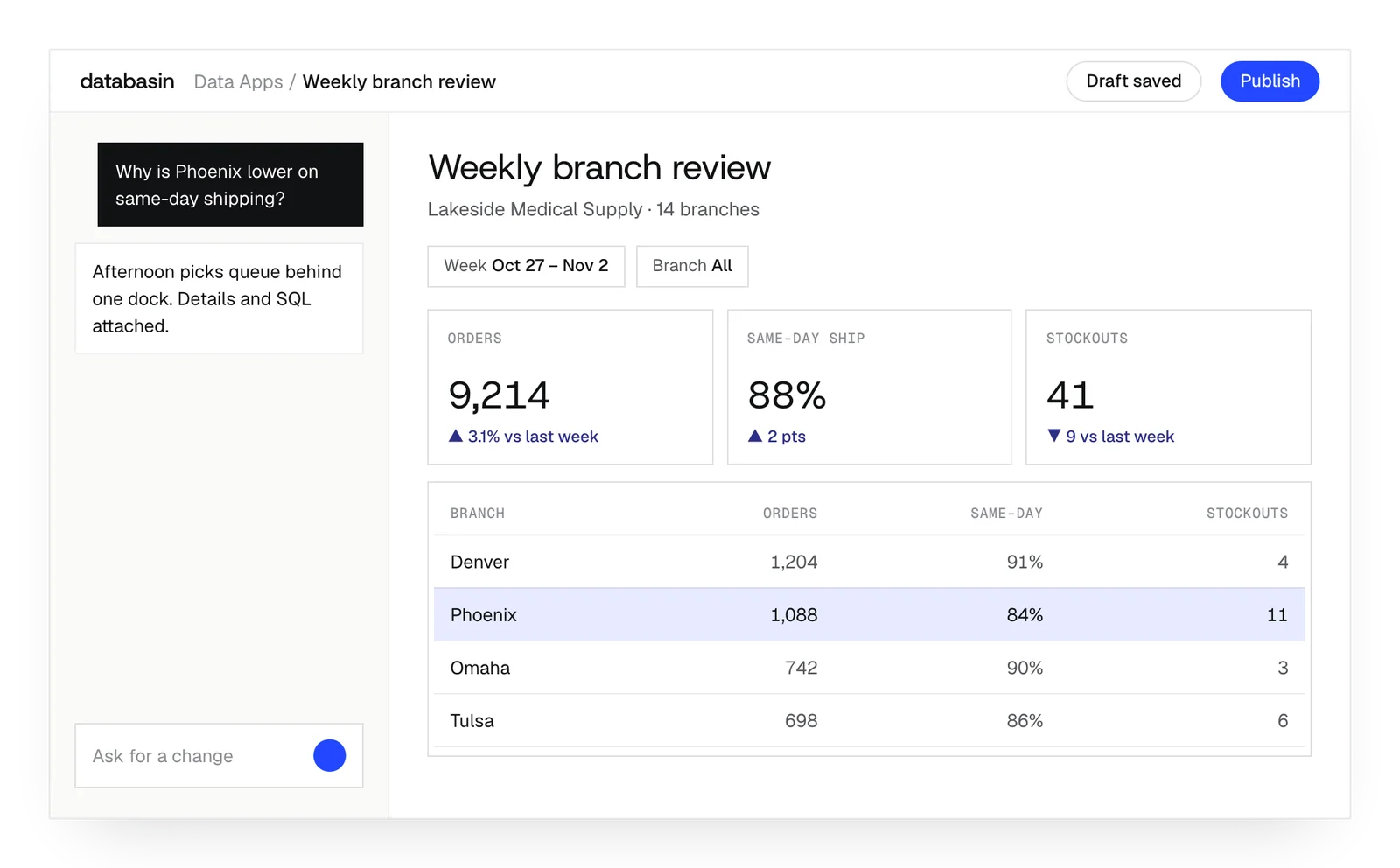





Capacity follows the business workload
We configure Databasin around the workload that will use it. Alongside stored volume, we examine the queries, refreshes and people working at the same time. Those details establish the preparation and capacity a business application needs.
A regular morning review, for example, can use workers started on a schedule before its queries arrive. We implement the source connections and models that feed it and train people to use the result. The compute settings then serve a specific routine, with its timing and audience included in the design.
What we configure for the work
Shared records
We prepare open tables that compatible engines and applications can read, keeping the records available for shared use.
Compute capacity
We configure clusters and workers for the queries, transformations and concurrent users involved in the application.
Preparation schedules
We put refreshes and subsequent tasks on schedules that support the reviews and applications using their results.
How does compute follow demand?
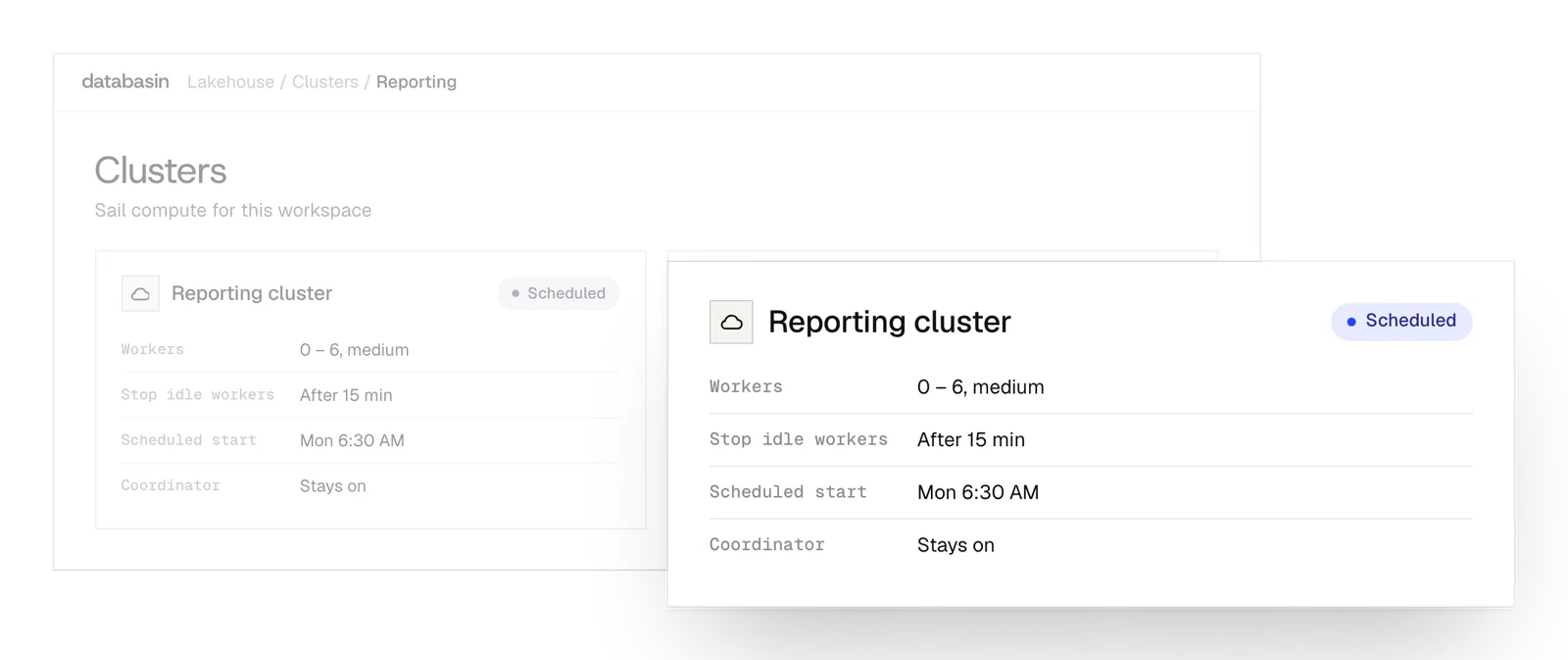
Sail can stop idle workers, then start them for the next query. A scheduled start can make workers ready before a regular reporting window.
The coordinator has its own setting to remain on or stop when idle. We choose the settings around the application's connection needs, including whether a first query can wait while the cluster starts.
More uses for prepared data
Prepared views can be used by more than one application. A Data App, a plain-language question and an analyst's SQL or notebook can all use the shared definition of a measure. The records remain available for those different ways of examining it.
We assess the next question against that starting point and add the preparation it requires. The implementation can grow through further applications using connected sources. Our team can run the continuing work, provide monthly support hours or stay on call, according to the arrangement you choose.
What happens next
We would like to hear where your team wants to make progress with data and AI. We can discuss a project you have in mind or explore where Databasin could help with the work.
What happens next
Book a demo
Book a conversation about your organization and the work you want to improve. Questions about where to start are welcome.
Explore the opportunity
We show a working example that answers your business questions, then discuss what it would take to deliver it for your team.
Get the first result
After agreeing the first use case, we implement it with your team. We train the people using it and measure how it performs.
FAQ
Is there a minimum data volume that makes Databasin useful?
There is no single volume threshold. We look at the questions and operating work the data supports. Databasin serves mid-market, healthcare and research organizations; their source and application requirements guide the implementation.
Can we change the cluster size after implementation?
Yes. Cluster size and worker settings can be changed. The interface asks you to confirm the restart required for cluster changes. We plan that interruption around applications already using the capacity.
Will a query wait after workers have stopped?
A query waits if its workers need to start. Scheduled starts can prepare them for a known review; keeping workers running is another option. We choose around the application's tolerance for that wait.
Do many notebook users change the capacity choice?
Yes. The coordinator supports notebook sessions, and its size determines the available concurrent sessions. We account for that use along with SQL queries and transformations when configuring capacity.
Can we query a source without copying it first?
A supported live-query connector can read a source directly. Scheduled sync can retain the records needed for history. We select the route using that source's available capabilities and the application's requirements.
Can retained history serve later analysis?
Yes. Retained records can support later questions within the history available. We prepare the definitions and period logic for the comparison so people can interpret the records from each period.
Can Databasin fit around a warehouse we already run?
Yes. Databasin can work alongside an existing Fabric, Databricks or Snowflake environment. We establish which useful work stays in place and implement the additional connections or applications needed for the result.
Is the configuration available in our own Azure tenant?
Yes. Databasin Private runs with your Azure subscription, storage, keys and network. We can also host it. The data and operating requirements determine the environment and access we configure.
Must every business system join the first implementation?
No. We connect the sources required by the first use case. Later applications can add other systems, with the business question determining the additional records and definitions to prepare.
Can you help when our usage changes after launch?
Yes. We can operate the work, provide monthly support hours or stay on call. The agreement establishes ongoing responsibilities, including how new sources, questions or usage patterns are addressed.
Discuss the data work you need
Talk with us about the analysis and recurring work your organization wants to improve. We can explore how Databasin would fit the questions, systems and working routines your people have today.