Implementation for stalled data platforms
We help people use the data platform their organization has already bought. Our team completes the source work and builds applications for business questions and recurring reviews. Databasin works alongside Databricks, Snowflake or Microsoft Fabric, with training, rollout and support to make the result part of everyday work.
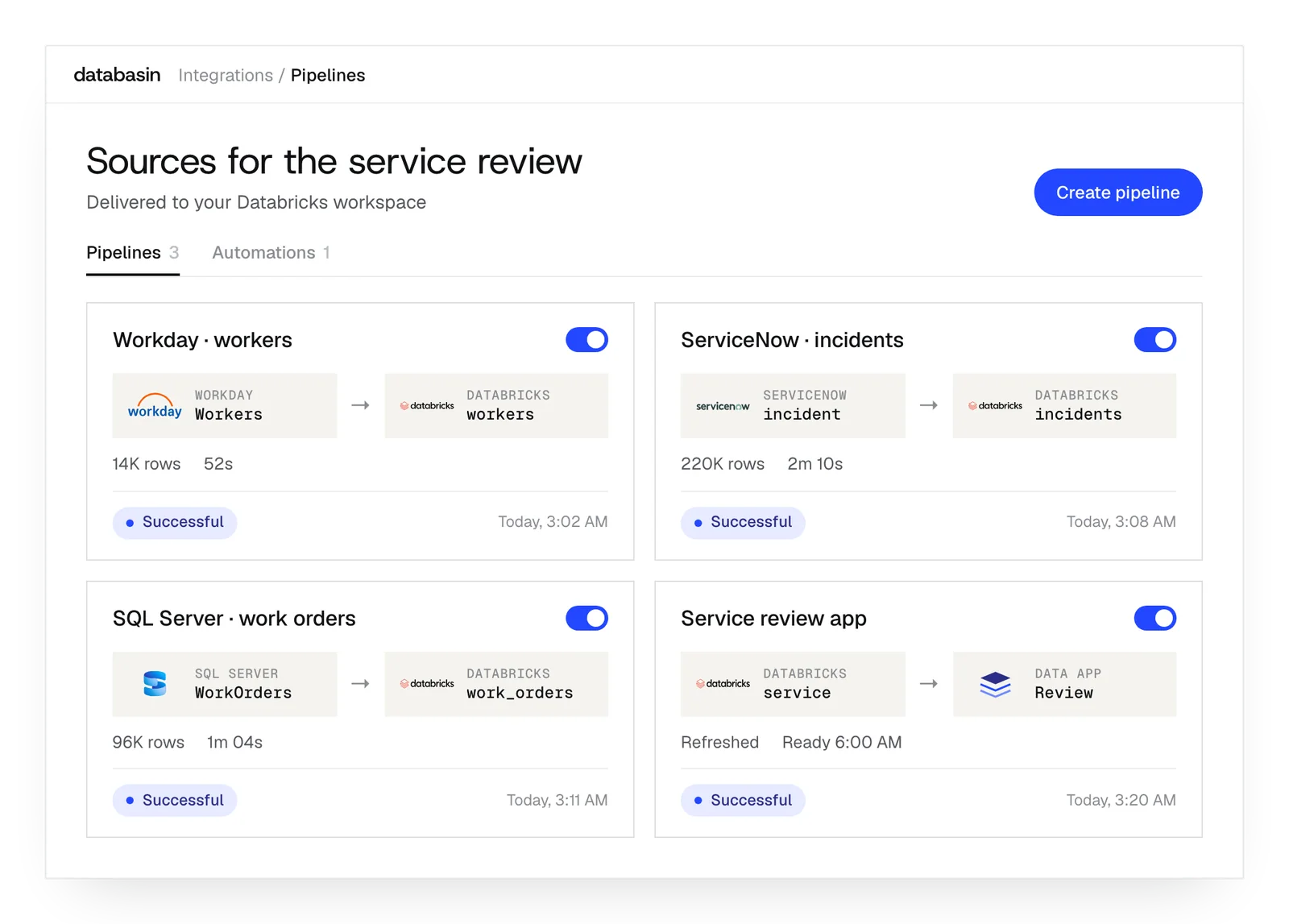





The work between deployment and use
We identify what is still needed for people to use the platform in their work. That can be a missing source, a measure departments define differently or an application that has not yet been adopted. These are different implementation jobs, so we examine them against the intended business result.
Our principal-level team uses Databasin to prepare the records and build the application with the environment you plan to retain. We also plan its rollout and use in the department's routine. The scope follows the first outcome people need.
Completing the first business use case
Source connections
Complete the source connections and mappings that the first application needs, including complex Epic or Workday records.
Business analysis
Build shared measures and applications so people can investigate the questions behind the original platform investment.
Team adoption
Plan rollout, training and success measurement around the people who will use the result in their work.
How does the existing work fit?
Databasin automations can run new preparation together with existing tasks. An external Databricks job, for instance, can complete before the next stage starts. Pipeline status and task logs show what happened. The resulting records can supply your BI tools, a Data App or questions asked in plain language.
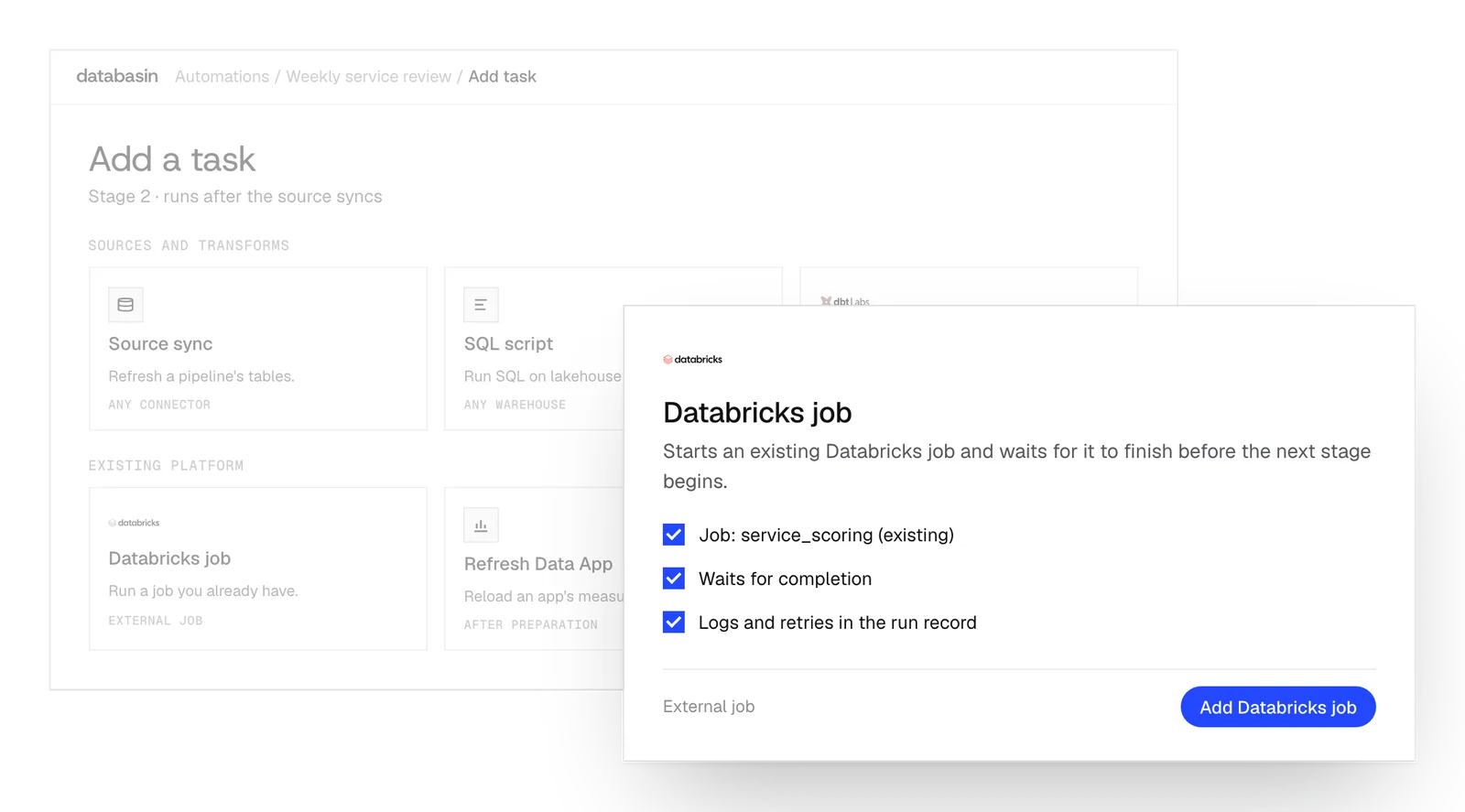
Adoption and operation after delivery
Our team helps people use the completed application in their decisions. Training and communication explain its role in the department's work. The success measures defined during Design let us examine whether that use supports the intended improvement.
We also establish who will operate it. Databasin can run the solution, supply monthly support hours or stay on call. Your organization chooses the help it needs as people adopt the application and develop further uses for the data.
What happens next
We would like to hear where your team wants to make progress with data and AI. We can discuss a project you have in mind or explore where Databasin could help with the work.
What happens next
Book a demo
Book a conversation about your organization and the work you want to improve. Questions about where to start are welcome.
Explore the opportunity
We show a working example that answers your business questions, then discuss what it would take to deliver it for your team.
Get the first result
After agreeing the first use case, we implement it with your team. We train the people using it and measure how it performs.
FAQ
Is a complete platform migration part of the starting requirement?
No. We can implement Databasin alongside the platform already deployed, including Databricks, Snowflake or Microsoft Fabric. Design establishes what the business use case still needs and how to build on the parts that will remain.
Can you help if the main delay is Epic access?
Yes. We help define the deployment and source connection for IT and security review. Clarity and available Caboodle reporting records supply the analytical path. Your institution approves the access, and we implement within that permission.
What if Workday history is producing inconsistent reports?
We can examine the historical values and calculations behind the report. Databasin retains Workday's effective-date history so an analysis can select the values that applied during its period. We implement that logic for the intended measures.
Can existing SQL and dbt work stay in use?
Yes. Databasin can run SQL, dbt Core and notebooks as automation tasks. We examine their inputs and outputs, then arrange them with source preparation and later delivery in the order the workflow requires.
Do you work with the platform vendor's account team?
Yes. The platform account team can join the implementation discussion. Together we can examine the existing environment and remaining source work in relation to the business result people are waiting to use.
How do you choose where to restart the project?
We examine the current process and define the outcome and expected return with the people involved. A working example shows the proposed result. This establishes the first use case and how progress will be assessed.
What delivery commitment applies to the first use case?
We get the first use case live in 90 days through Design, Build, Run. The engagement includes communication, rollout, training and success measurement. Design establishes the outcome that the implementation will deliver.
Can we keep a report that colleagues already know?
Yes. We examine which decisions the report supports and the preparation it needs. Useful BI views can remain while we build the source connections and calculations that supply them.
What can the team see when a workflow breaks?
Support staff can inspect task logs, run status and versioned workflow snapshots to understand the failed step. Failed tasks retry. The records also identify the workflow setup used, which helps when investigating what changed.
Do we need a technical diagnosis before booking?
No. We can begin by discussing what people expected to do and where progress stopped. Our team can work through the sources, applications and operating needs as the engagement takes shape.
Discuss the work still ahead
Whether the project has stopped at source access, modeling or adoption, we can talk through what remains. We can explore how Databasin would help your teams use the systems and work already in place.