Business answers on your Databricks data
Your Azure Databricks data can support business questions, shared Data Apps and recurring workflows through Databasin. We connect the sources, define the measures and implement the applications your teams need. People can investigate changes and use the results in their work while Databricks remains your data platform.
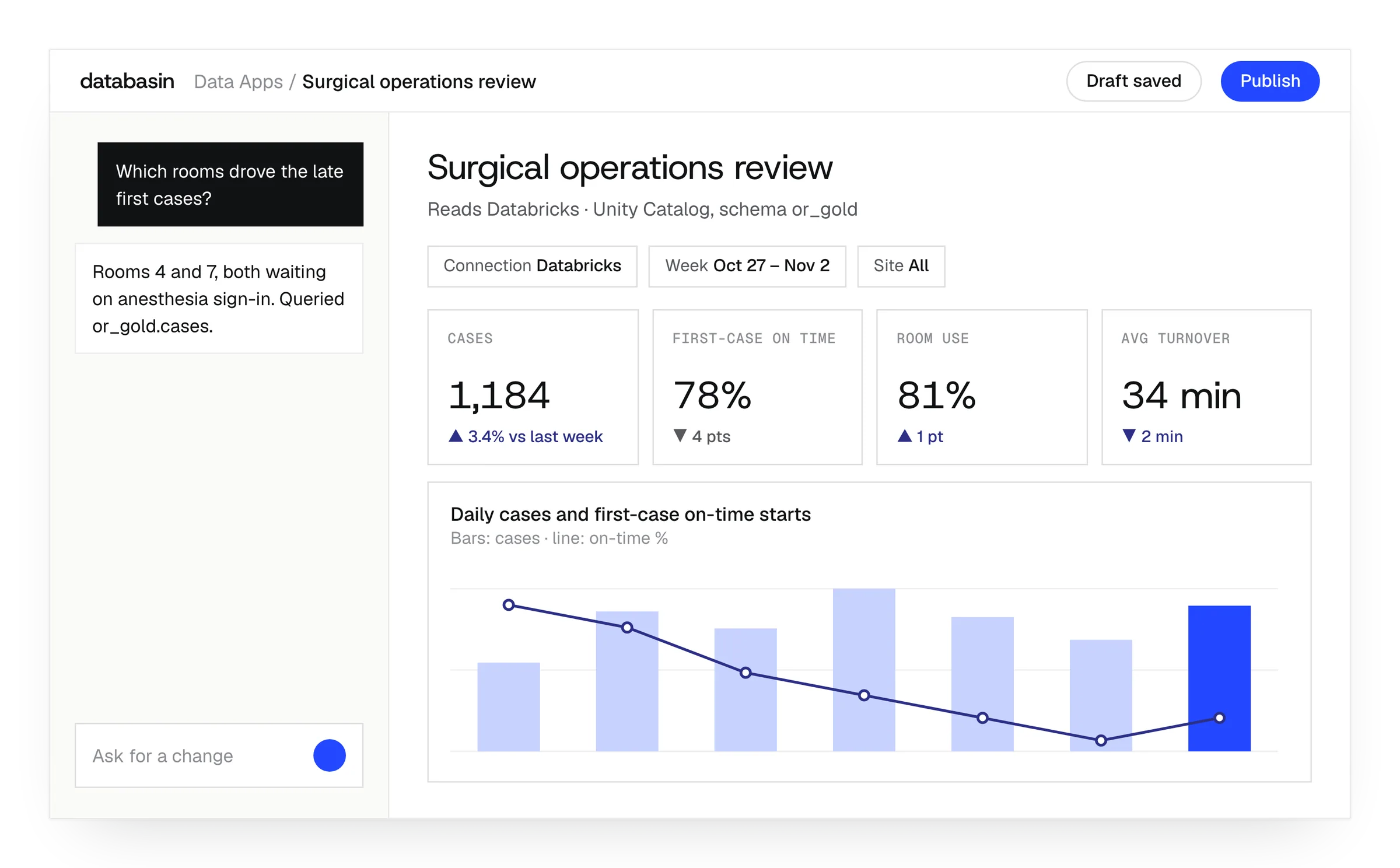




Put the existing lakehouse to work
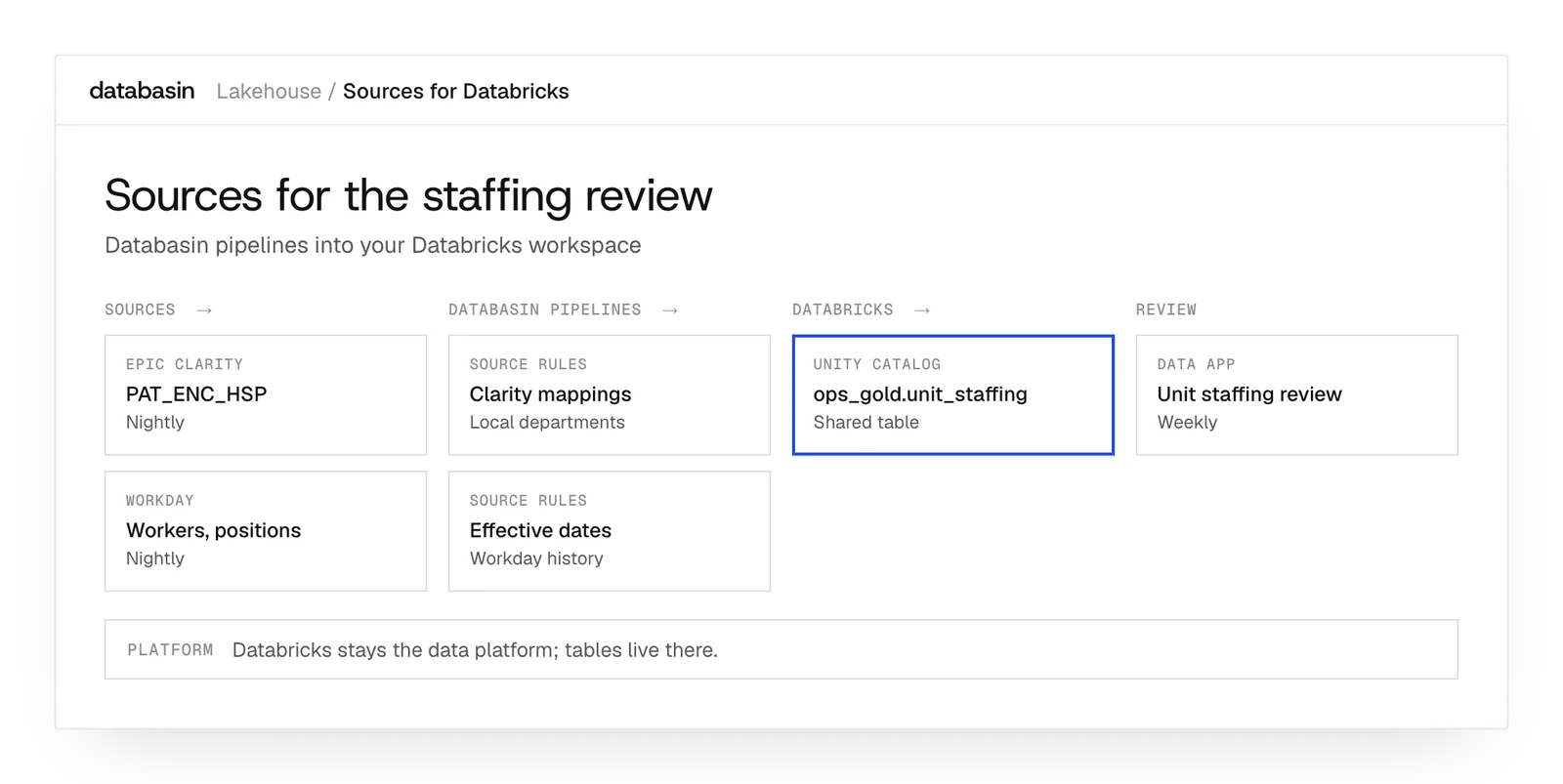
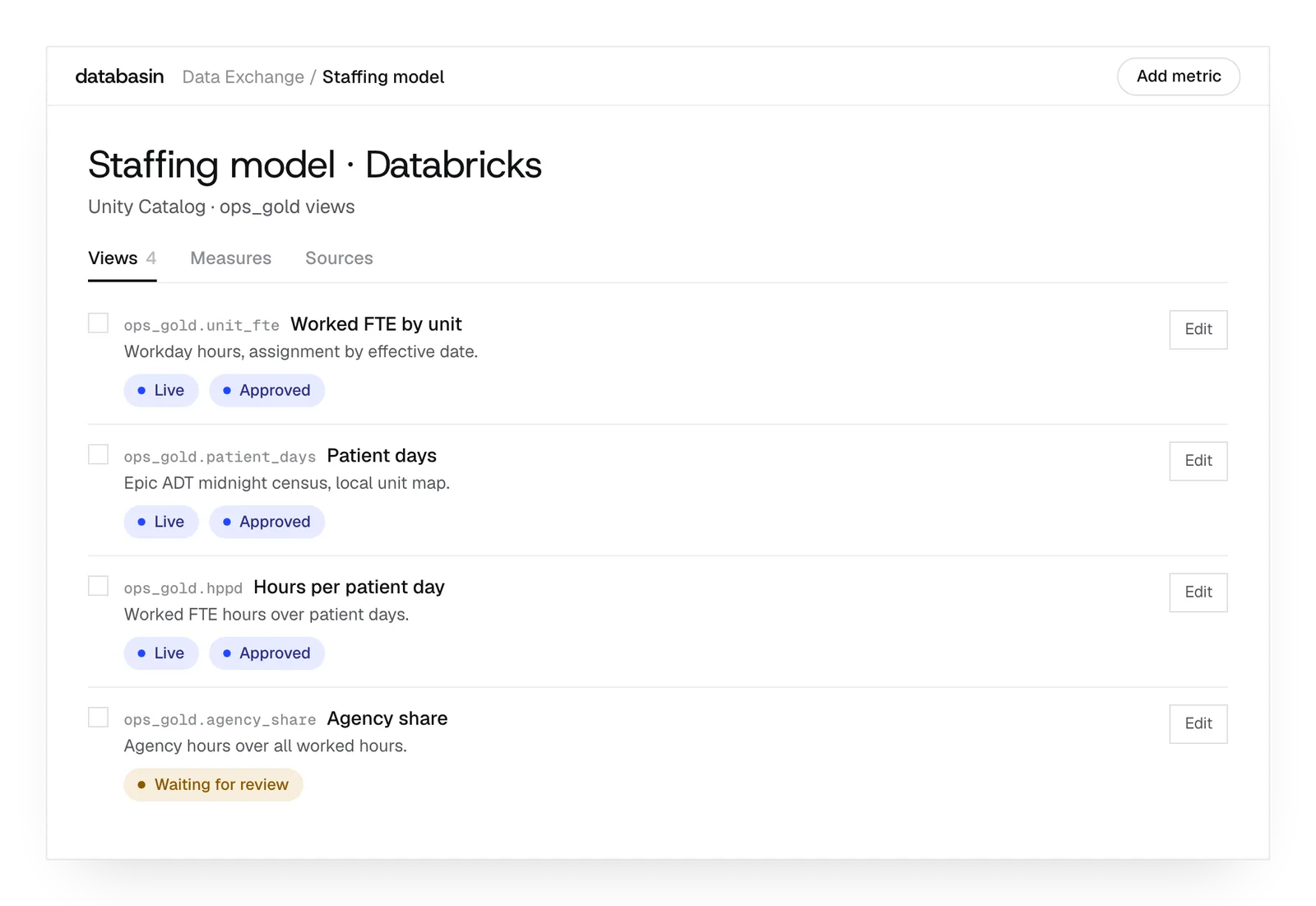
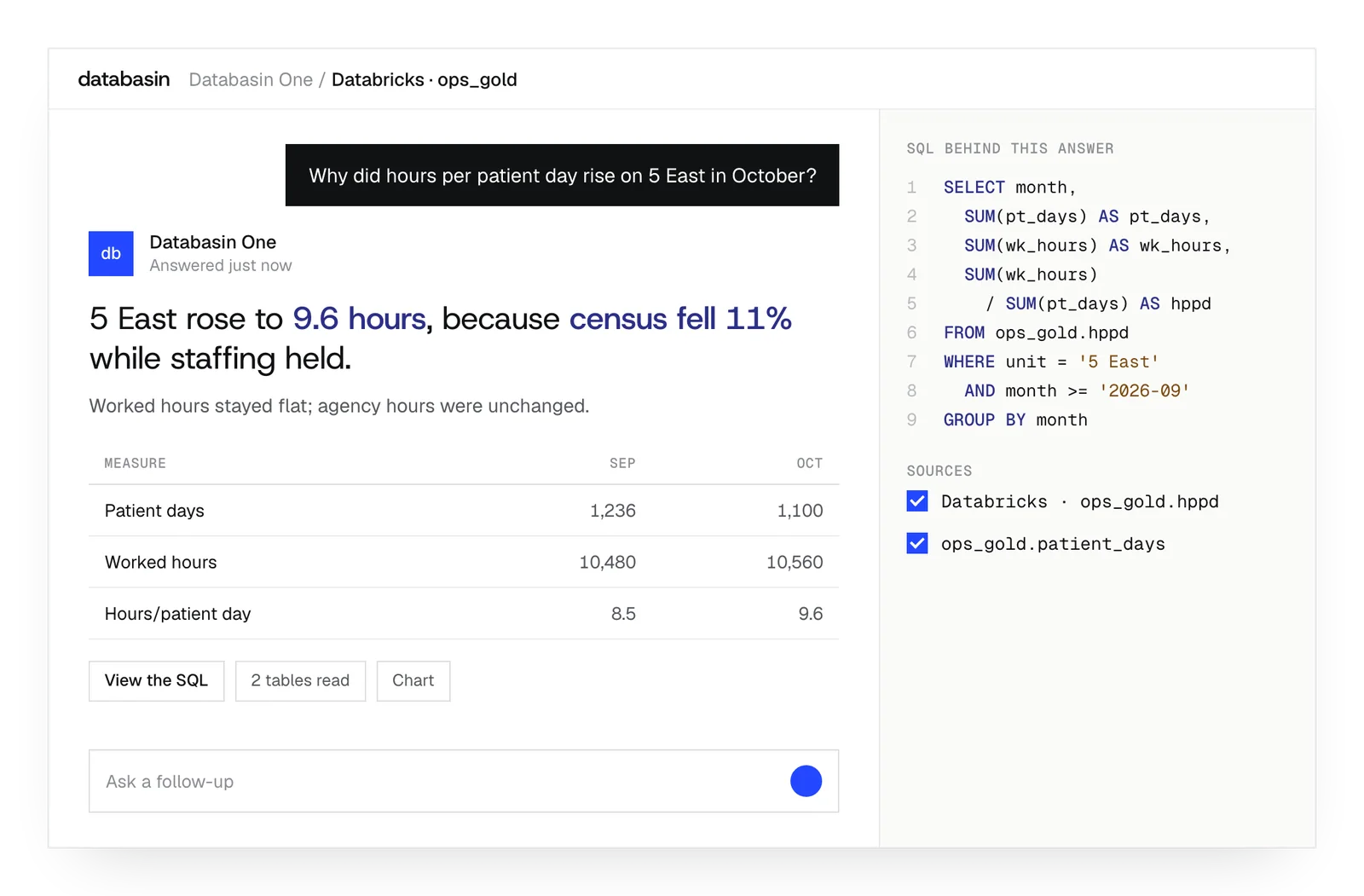
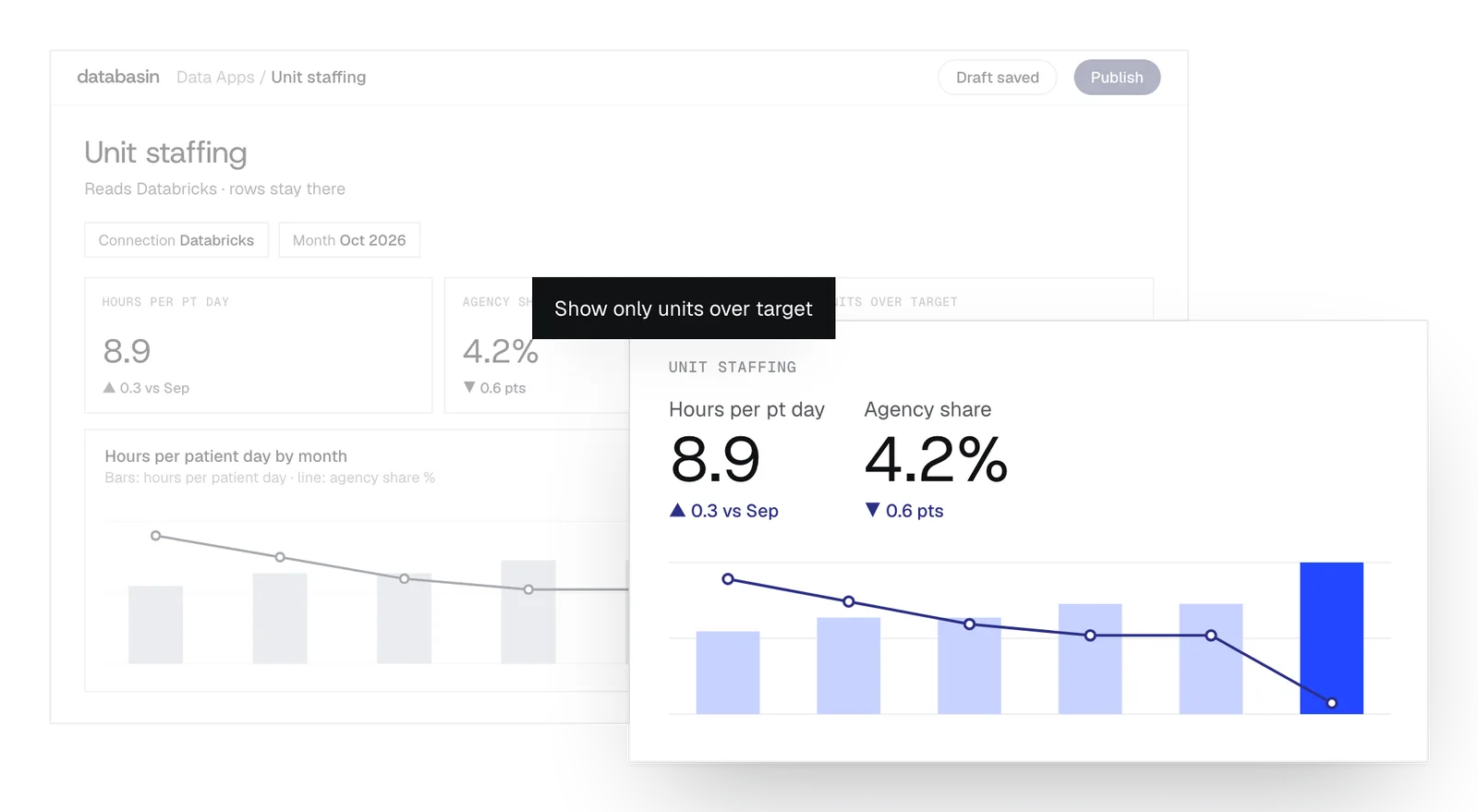
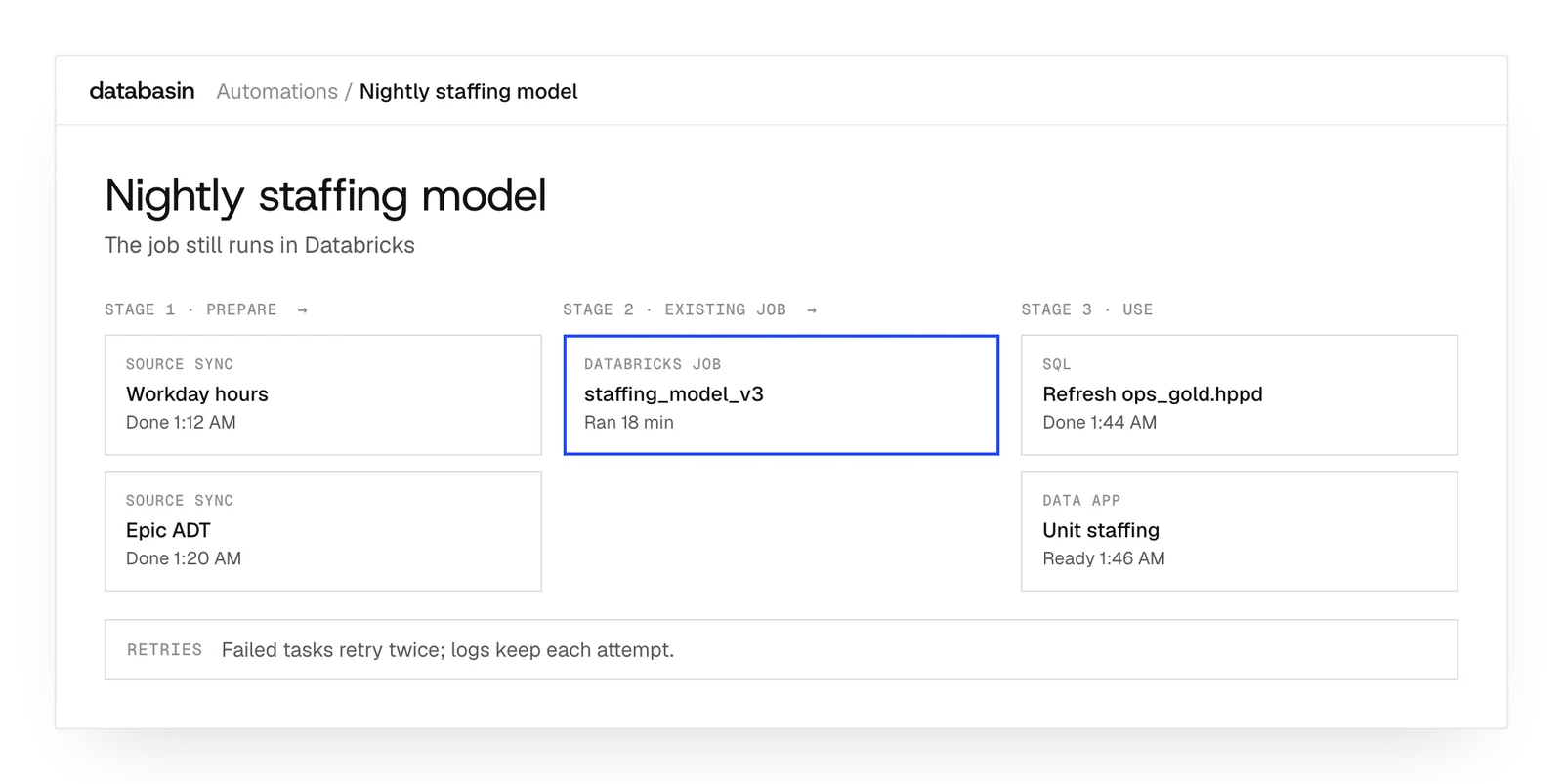
Design, Build, Run
We take responsibility for the work from defining the outcome through implementation and ongoing support.
Design
We define the outcome, current processes and expected return with your stakeholders. A working example shows how Databasin would answer your business questions.
Build
We get your first use case live in 90 days. Communication, rollout, training and success measurement are included in the work.
Run
Choose the help you need after launch. We can run the solution for you, provide monthly support hours or stay on call.
Results from customer work

- 20+ systems unifiedDatabasin brought WashU Medicine's financial data together.
- Infrastructure costs at 1/3 of the traditional approachWashU Medicine's result from changing its data infrastructure.
18%
Higher grant proposal success
Measured at a research institution working with Databasin.
“What used to take weeks or sometimes even months now happens in minutes.”
Details for the existing environment
Source connections
Add operational source records to the analysis running in your existing lakehouse.
Historical values
Keep the historical Workday values needed for staffing and compensation comparisons.
Read-only applications
Check that each Data App query is read-only before it runs.
Versioned changes
Prepare an application revision privately before publishing it for other users.
Run records
Examine the run record for preparation, the job and the tasks after it.
Connection identity
Configure the task with a supported token or service-principal connection identity.
Example: Reviews built on Databricks
Research analysis
Connect clinical and study records for the research analysis planned in the team's existing Azure Databricks environment.
Workforce history
Review a change in headcount using dated manager and department assignments for the periods being compared.
Operational reviews
Prepare the source records before running an existing job, then examine its results in the team's operational review.
What happens next
We would like to hear where your team wants to make progress with data and AI. We can discuss a project you have in mind or explore where Databasin could help with the work.
What happens next
Book a demo
Book a conversation about your organization and the work you want to improve. Questions about where to start are welcome.
Explore the opportunity
We show a working example that answers your business questions, then discuss what it would take to deliver it for your team.
Get the first result
After agreeing the first use case, we implement it with your team. We train the people using it and measure how it performs.
FAQ
Do we have to move our Databricks tables?
No. Data Apps can query Databricks directly, and Databasin can use existing governed tables for business questions. We determine where each source, transformation and application should run during design. That lets the implementation build on the environment and data work you already have.
Is direct Unity Catalog access generally available?
The published Databasin capability for reading Unity Catalog data in place is in preview. We review that route separately from the supported Databricks connection and Data Apps execution. The implementation uses the connection appropriate to the tables, permissions and work you need.
Are Data Apps and Databasin One Databricks products?
They are separate Databasin products. Databasin One provides questions and answers; Data Apps provides shared applications that can query Databricks. Databricks Apps and Genie belong to Databricks. We establish where the additional work would help alongside the tools your teams already use.
Can we use ready-made connector apps on Databricks?
Those apps currently run on Trino lakehouses. We can build a custom Data App for Databricks, using the tables and measures needed for the review. People can then refine its layout through the builder conversation as they use the application.
Can every task use a service principal?
No. The Databricks connection offers service-principal and token authentication, but dbt tasks require a personal access token. The Entra ID service-principal path does not support that task. We configure the workflow's identities around the requirements of each operation.
Can existing Databricks dashboards remain in use?
Yes. The team can continue to use existing dashboards while we implement the added sources or application. We define how the new work relates to the records already there. Jobs can stay in Databricks too, with a Databasin automation starting them when needed.
Does sharing a Data App expand a viewer's access?
No. A Data App uses the warehouse permissions of the person viewing it. Its shared link does not add access to records. We configure the application's audience and connection together, so people can use the review within their existing data permissions.
Can you help with a Databricks rollout that has stalled?
Yes. We work through the unfinished sources, models and applications against the business result the rollout was meant to deliver. From there, we implement the work needed for a first usable result. The deployment rescue service covers this kind of stalled platform project.
Discuss your Databricks plans
We would be glad to hear what is working in your Databricks environment and what your teams still need. We can discuss the business questions, unfinished work and support that would help you make progress.